Why Cape Town Is Leading in Sustainable Tourism
Sustainable tourism in Cape Town is more than a trend — it’s a movement blending natural beauty, cultural heritage, and community empowerment. From world-class eco-hotels to government-backed initiatives, Cape Town is fast becoming one of Africa’s most forward-thinking green destinations.
Natural & cultural assets
- Cape Town sits within the globally-unique Cape Floristic Kingdom: a biodiversity hot-spot with green spaces integrated into the urban fabric. The Cape Floristic Kingdom is the smallest, yet richest of the world’s six recognized floral kingdoms.
- It covers a narrow area at the southern tip of South Africa — roughly from Cape Town eastward to Port Elizabeth
- The Cape Floristic Kingdom is home to over 9,000 plant species, and about 70% are endemic (found nowhere else in the world).
- Dominated by fynbos vegetation — a type of shrubland adapted to fire and nutrient-poor soils.
- Famous plant families include:
- Proteaceae (e.g. the king protea, South Africa’s national flower)
- Ericaceae (heaths)
- Restionaceae (reeds and grasses)
- Cape Town’s combination of iconic landscapes (e.g. Table Mountain, coastline, nature reserves) and rich cultural heritage gives it a strong base for nature- and culture-driven tourism (which often aligns well with sustainability).
Growing market alignment
- Cape Town is ranked among the world’s best cities for eco-friendly travel (taking into account green space, air quality, tourist-to-local ratios).
- The city’s tourism strategy emphasises “responsible tourism” — i.e. Tourism that creates better places to live in and better places to visit.
Institutional and business momentum
- The Provincial Government (Western Cape Department of Economic Development and Tourism) is running a “Sustainable Tourism Enterprise Programme” (STEP) that guides small tourism businesses to adopt sustainability certification and reporting.
- Major hospitality operations in Cape Town are achieving recognised sustainability certifications. For example:
- Pullman Cape Town earned the Green Key certification.
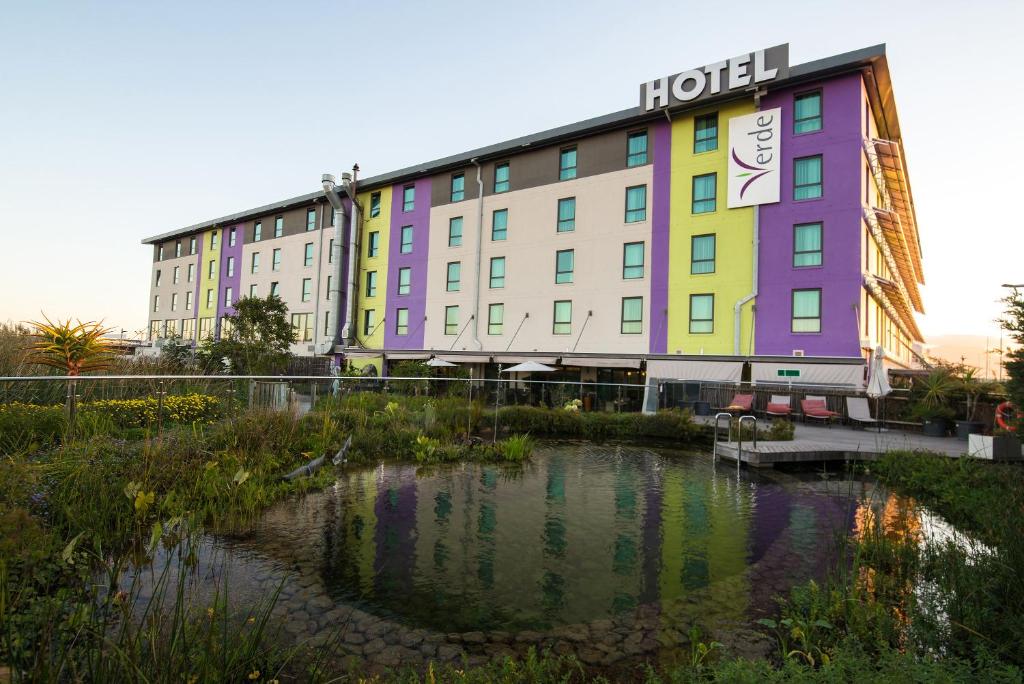
- Hotel Verde Cape Town Airport was named “Africa’s Leading Green Hotel”.
- Urban precincts are incorporating sustainable infrastructure: For example, the V&A Waterfront has a desalination plant, grey-water reuse, solar rooftop arrays and a new electric sightseeing boat.
What Cape Town is doing — specific initiatives
Here are a few concrete examples of sustainable tourism action in Cape Town:
Green building & hospitality
- Hotels obtaining the Green Key eco-label (which covers energy, water, waste, guest awareness) reflect higher standards in operations. (e.g. The Westin Cape Town achieved it in 2025.
- Hotel Verde’s zero-waste-to-landfill policy, water-saving technologies and renewable energy use set a leading example.
Transport & precincts
- The V&A Waterfront’s electric sightseeing boat replaces fossil-fuel boats, reduces emissions and improves ambiance and wildlife experience.
- The Waterfront’s grey-water reuse and on-site desalination helps conserve scarce water resources.
Supporting local tourism enterprises
- The STEP programme by the Western Cape Government helps small/medium enterprises (SMEs) in tourism to adopt sustainability practices, which strengthens the broader tourism ecosystem.
Responsible tourism policy
- The city’s tourism branch organised industry-partners to sign a “Responsible Tourism” pledge in 2024, signalling collective commitment.
- The earlier Responsible Tourism Charter (based on the 2002 Cape Town Declaration) continues to serve as a foundation for integrating economic, social and environmental sustainability in tourism.
Why this matters
For visitors, investors and communities, the sustainable tourism push in Cape Town offers benefits:
- For visitors: More eco-friendly choices (accommodations, transport, activities), likely improved authenticity, and the sense of travelling responsibly.
- For the local economy: Sustainable tourism can generate longer-term value, support jobs, preserve local culture/nature, and reduce the risk of “over-tourism” degrading the product. The Invest Cape Town site notes the tourism sector accounts for ~5.2% of the city’s gross value added.
- For environment & community: Reduced resource pressure (water/energy/waste), greater community engagement, infrastructure investments that benefit residents and visitors alike.
Challenges & things to watch
While Cape Town is making strong strides, there are still important challenges and caveats:
- Water & climate vulnerability: Cape Town has suffered from droughts in recent years, and climate change will increase pressure. Sustainable tourism must continue to integrate adaptation and resilience.
- Balancing growth & local wellbeing: As tourism numbers increase, there’s a risk of local displacement, rising costs, traffic congestion, and infrastructure strain — especially in sensitive heritage areas.
- Ensuring genuine impact, not just “greenwashing”: Certifications like Green Key are helpful but must be backed by meaningful changes in operations and supply-chains.
- SME support and capacity: Smaller operators may lack resources to implement sustainability practices without help — programmes like STEP help, but broad uptake is needed.
- Over-tourism risk in hotspot neighbourhoods: While not yet at extreme levels compared to some global destinations, careful management is required to preserve neighbourhood living quality and authenticity.
What you can do as a visitor
If you’re travelling to Cape Town and want to support its sustainable tourism leadership, consider:
- Stay in accommodations certified or committed to sustainability (look out for Green Key or other eco-labels).
- Choose activities/providers with responsible and local-community oriented practices (ask about waste, resource use, local employment).
- Use public or shared transport options, or choose low-impact tours (e.g., by foot, bike, electric boat).
- Respect local neighbourhoods, heritage sites and natural areas by following rules, sticking to paths, minimizing waste and being sensitive to residents.
- Support local businesses and craft/trade rather than just global chains — this helps the economic sustainability part.
- Be mindful of your water and energy use — small personal choices add up especially in water-scarce regions.
Sustainable Stays
Hotel Verde Cape Town Airport
- This hotel describes itself as “Africa’s Greenest Hotel” with sustainability built into its design and operations — LED lighting, grey-water recycling, renewable energy, etc.
- Good for travellers who want a stay where eco-credentials matter.
- Tip: Ask for a tour of their “green story” or find out how they implement their sustainability measures (which they highlight).
Cape Grace
- Earned the prestigious Green Key certification, and holds a global resource-efficient building certification (EDGE) — meaning sustainability is built into both the building and operations.
- Particularly good if you prefer historic/ upscale stays but still want sustainability.
- Tip: Inquire about how they support local communities and reduce single‐use plastics, as they emphasise these.
The Vineyard Hotel and Spa
- This is another strong sustainable option: around 80 solar panels, grey-water harvesting, 98% waste recycling.
- Great if you want a relaxed stay with spa/green-garden vibe near nature.
- Tip: Ask which rooms have the best views over green space and whether they include green tours or info about their sustainability practices.
Final Thoughts
Cape Town is well on its way to being a leader in sustainable tourism — thanks to its unique natural and cultural assets, growing institutional commitment, innovative business practices and a tourism sector recognising that sustainability is both good for the planet and good for business.
Cape Town still has work to do — especially around managing growth, strengthening SME support, and ensuring community benefits — but the signs are very positive.