Unforgettable Things to Do in Cape Town
Cape Town is one of those rare destinations where mountains, ocean, wildlife, history, wine, food and vibrant neighbourhoods all come together within a relatively small area. You can hike above the clouds in the morning, watch penguins on the beach in the afternoon and enjoy a spectacular sunset over the Atlantic in the evening.
Here are 30 unforgettable experiences to add to your Cape Town travel itinerary.
Mountains & Spectacular Views
1. Take the Cableway up Table Mountain
Taking the Table Mountain Aerial Cableway is one of Cape Town’s quintessential experiences and one of the easiest ways to reach the summit of the city’s most famous landmark. The journey begins at the Lower Cableway Station on the slopes of Table Mountain, where the cable car climbs dramatically above the city.
As the rotating cable car rises, the views become increasingly spectacular. The floor of the car rotates slowly, giving passengers a constantly changing panorama of Cape Town, Table Bay, the Atlantic Ocean and the surrounding mountains. Looking back towards the city, you can see the dense urban landscape stretching towards the harbour and, on clear days, Robben Island beyond the bay.
The approximately five-minute journey takes you from the lower station to the Upper Cableway Station near the summit. As you approach the top, the landscape changes from the city below to the rugged sandstone cliffs and distinctive flat-topped plateau of Table Mountain.
Once at the summit, take time to explore the network of paths and viewpoints. You can walk along the plateau, photograph the dramatic cliffs and enjoy extraordinary views towards Lion’s Head, Signal Hill, the Twelve Apostles, Camps Bay, the Cape Peninsula and the ocean.
One of the most enjoyable aspects of the experience is that you don’t have to be an experienced hiker to enjoy Table Mountain. The cableway makes the summit accessible to visitors who may not be able to undertake the strenuous climb on foot.
For the clearest views, early morning is often a good choice, although weather on Table Mountain can change quickly. Late afternoon can be particularly beautiful when the lower sun creates long shadows across the mountain and coastline.
Allow at least 1–2 hours at the summit, and longer if you want to explore several viewpoints, have something to eat or simply sit and enjoy the scenery.
Travel tip: Always check the cableway’s operating status and weather conditions before setting out. Strong winds and poor weather can cause temporary closures.
2. Hike up Table Mountain

Hiking up Table Mountain is one of Cape Town’s most rewarding adventures. Rather than simply taking the cableway to the summit, walking up the mountain allows you to experience its rugged cliffs, indigenous fynbos, rocky slopes and changing landscapes at a much slower pace.
One of the most popular routes is Platteklip Gorge, which begins on the northern face of Table Mountain and climbs directly towards the summit. The route is relatively straightforward to follow but is steep and physically demanding, with large rocky steps requiring a steady pace and plenty of water.
As you climb higher, the views become increasingly impressive. Looking back, Cape Town gradually unfolds beneath you, with Table Bay, the V&A Waterfront, Signal Hill and Robben Island becoming smaller in the distance. On the other side, the rugged cliffs and peaks of the mountain create an impressive natural amphitheatre.
For a more varied experience, Skeleton Gorge offers a completely different character. The route begins in the lush surroundings of Kirstenbosch National Botanical Garden and climbs through indigenous forest before emerging onto the upper slopes of Table Mountain. It is a wonderful choice for hikers who enjoy changing scenery rather than a direct ascent.
At the summit, the effort is rewarded with enormous views across the Cape Peninsula. Walk along the plateau, explore the viewpoints and look towards Lion’s Head, the Twelve Apostles, Camps Bay, the Atlantic Ocean and False Bay. On a clear day, the sense of standing high above the entire city is unforgettable.
The real attraction is the journey rather than simply reaching the summit. You experience Table Mountain’s unique vegetation and geology at close range, hear birds and wind moving through the fynbos, and gradually watch the city transform into a spectacular landscape far below.
Table Mountain’s weather can change remarkably quickly. Even on a warm Cape Town day, the summit can be cold, windy or covered in cloud. Wear sturdy hiking shoes, carry sufficient water, protect yourself from the sun and check the weather before starting.
If you’re unfamiliar with the mountain, hiking with an experienced local guide is a sensible option, particularly for less straightforward routes or changing weather conditions.
3. Hike Lion’s Head
Hiking Lion’s Head is one of Cape Town’s most rewarding outdoor experiences, combining a relatively short mountain adventure with some of the finest panoramic views in the city. Rising to about 669 metres, Lion’s Head stands between Table Mountain and Signal Hill and provides an almost 360-degree perspective over Cape Town, the Atlantic Ocean and the Cape Peninsula.
The trail begins near the base of the mountain and follows a steadily climbing path that winds around the slopes. As you ascend, the scenery continually changes. Looking one way, you can see Table Mountain towering above you; looking the other way, the Atlantic coastline stretches towards Camps Bay, Clifton and the Twelve Apostles.
The final section is where the hike becomes more adventurous. The trail involves rocky sections, chains and ladders, with a few areas requiring you to use your hands for support. There is an alternative route around some of the more exposed scrambling sections, making the experience suitable for a wider range of hikers, although sensible footwear and care are essential.
One of the most memorable ways to experience Lion’s Head is to hike before sunrise. Starting in darkness with a headlamp and reaching the summit as the sky begins to brighten creates an extraordinary experience. Cape Town slowly emerges below you as the first light reaches Table Mountain, the ocean and surrounding peaks.
A sunset hike is equally spectacular. From the summit, you can watch the sun sink towards the Atlantic while the Twelve Apostles and city gradually become silhouettes. If hiking after dark, take appropriate lighting and exercise additional caution.
At the top, you’ll be treated to an exceptional panorama. Camps Bay and Clifton lie below, Table Mountain dominates the eastern skyline, and the Atlantic stretches towards the horizon. Looking south, you can see the Cape Peninsula disappearing into the distance.
The summit is also an excellent place to pause, have a snack and simply absorb the landscape.
Lion’s Head is generally considered a moderate hike, but it is not just a casual walk. The trail climbs continuously and the final scrambling sections require some agility. Allow roughly 2 to 3 hours for the return hike, depending on your pace, stops and route.
Weather is particularly important. Strong wind, rain or low cloud can make the exposed upper sections considerably more challenging. Always check conditions before setting out and carry water, a warm jacket, sun protection and suitable footwear.
4. Watch the sunset from Signal Hill
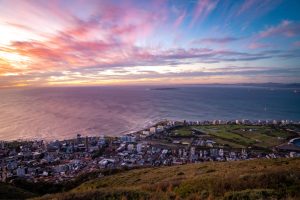
Watching the sunset from Signal Hill is one of Cape Town’s simplest yet most unforgettable experiences. Rising above the City Bowl and the Atlantic Seaboard, Signal Hill provides a spectacular natural balcony from which to watch the sun disappear over the Atlantic Ocean.
As late afternoon approaches, visitors make their way up the winding road to the summit, where you can find a viewpoint overlooking Cape Town, Table Bay, Robben Island, Lion’s Head and the Atlantic coastline. The atmosphere is relaxed, with people arriving with blankets, picnic baskets, cameras and something to drink while waiting for the evening show.
As the sun begins to descend, the landscape gradually changes. The cliffs and peaks of Lion’s Head and Table Mountain become silhouettes, while the ocean catches the last golden light of the day. On a clear evening, the setting sun can create a beautiful trail of light across the Atlantic before disappearing below the horizon.
One of the best things about Signal Hill is the 360-degree perspective. Turn towards the city and you can watch Cape Town’s buildings and streets begin to sparkle as evening arrives. Look towards the ocean and the horizon seems to stretch endlessly westward.
Don’t leave immediately after the sun disappears. The twilight period can be almost as beautiful as the sunset itself. The sky gradually changes colour while Cape Town’s lights come alive below, creating a wonderful contrast between the darkening mountains, glowing city and deep-blue Atlantic.
Signal Hill is also a popular place for a sunset picnic, making it an easy experience to combine with a relaxed evening in Cape Town.
For photographers, Signal Hill offers an exceptional combination of foregrounds and distant scenery. Depending on the viewpoint, you can frame the sunset with Table Mountain, Lion’s Head, the city skyline or the Atlantic Ocean. Arriving a little before sunset is worthwhile, particularly on busy summer evenings, so you have time to find a good viewing position.
5. Explore the Twelve Apostles
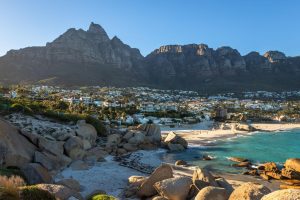
Exploring the Twelve Apostles mountain range is a wonderful way to experience the dramatic natural beauty of Cape Town. Stretching along the Atlantic coastline between Table Mountain and Hout Bay, the range rises dramatically above the ocean, creating one of the city’s most spectacular landscapes.
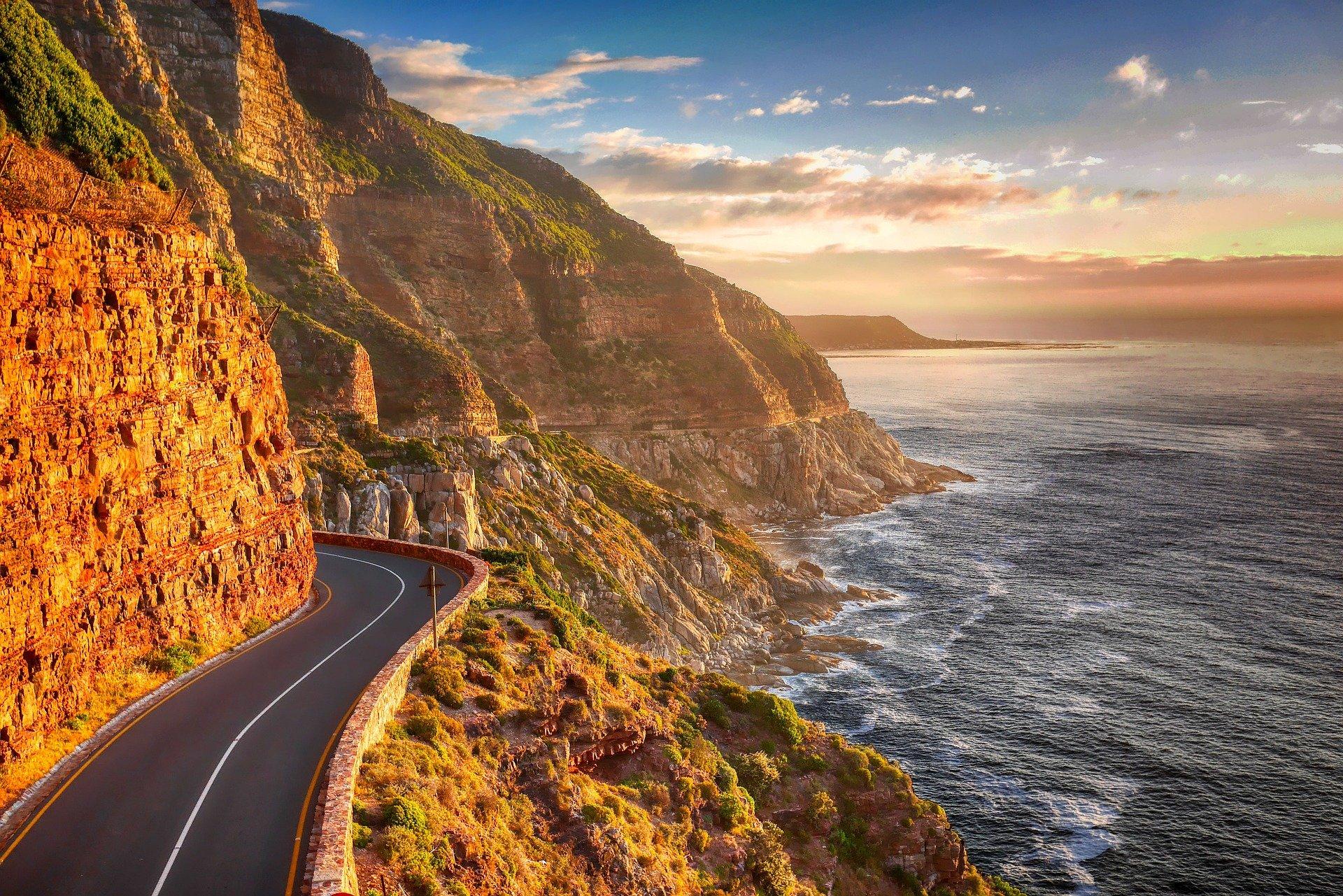
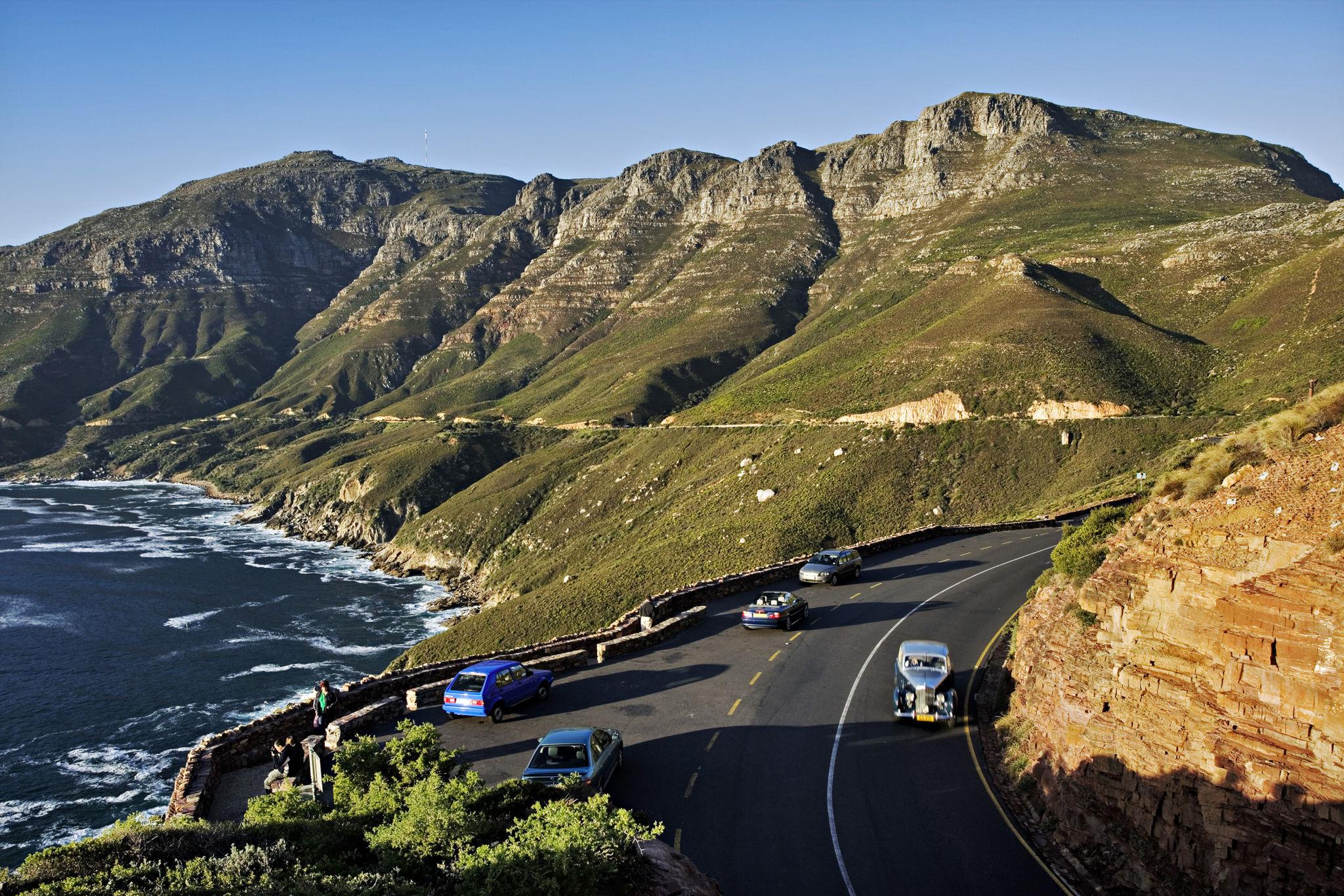
The mountains are best appreciated from several different perspectives. From Camps Bay, the Twelve Apostles form an impressive backdrop to the beach, with their rugged sandstone peaks rising steeply from the coastline. Along the Victoria Road and Chapman’s Peak Drive, the mountains appear to plunge almost directly into the Atlantic, creating spectacular combinations of cliffs, ocean and winding roads.
For a closer encounter, several hiking routes cross the slopes and valleys of the range. The Pipe Track is a particularly enjoyable option, following the mountain above Camps Bay and providing wonderful views across the Atlantic. More adventurous hikers can explore hiking routes towards Kasteelspoort and the upper slopes of Table Mountain.
Walking through the area gives you the opportunity to experience the Cape’s unique fynbos vegetation, rocky mountain scenery and dramatic coastal viewpoints. Keep an eye out for birds and other wildlife among the vegetation.
You don’t have to be a serious hiker to appreciate the Twelve Apostles. A drive along Victoria Road from Camps Bay towards Hout Bay provides numerous opportunities to stop, photograph the scenery and enjoy ocean views.
For an especially spectacular experience, continue towards Chapman’s Peak Drive, where the mountains, cliffs and Atlantic Ocean combine to create one of the Cape Peninsula’s most memorable scenic drives.
The Twelve Apostles are particularly beautiful in the late afternoon. As the sun drops towards the Atlantic, the sandstone cliffs can glow warmly while the ocean takes on deeper shades of blue. Camps Bay and the coastal viewpoints are excellent places to watch the changing light.
What makes the Twelve Apostles special is the combination of mountains and ocean. Few places allow you to stand beneath a dramatic mountain range while looking directly across an enormous stretch of open sea.
The Twelve Apostles are more than a spectacular backdrop to Cape Town. They are a meeting place of mountain and ocean, where rugged sandstone peaks, indigenous fynbos and the Atlantic coastline come together to create one of the most dramatic landscapes in South Africa.
6. Visit the colourful Bo-Kaap
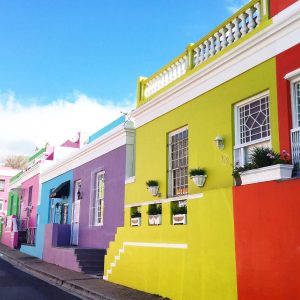
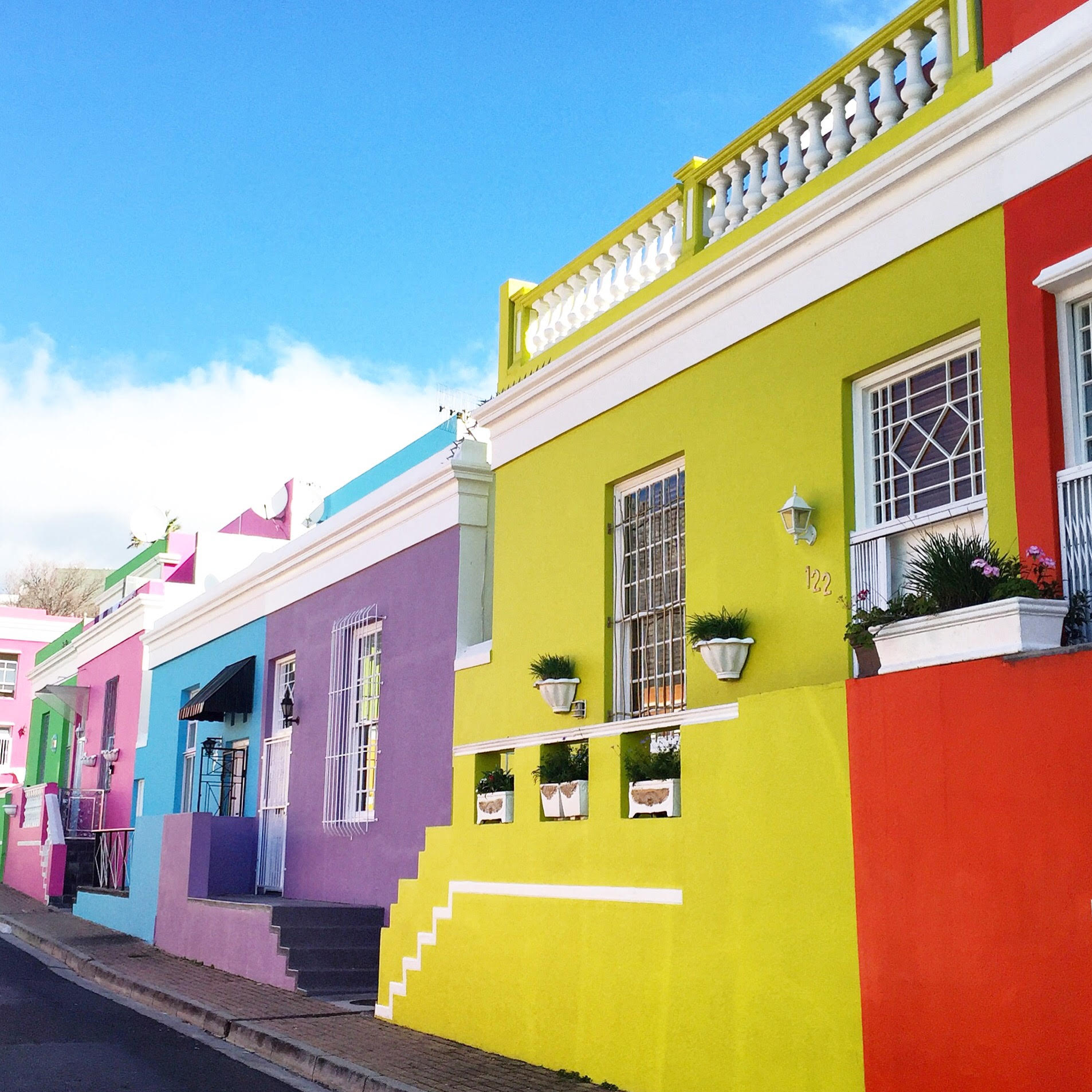
Visiting the Bo-Kaap is one of the most colourful and culturally fascinating experiences in Cape Town. Set on the slopes of Signal Hill above the city centre, this historic neighbourhood is famous for its rows of brightly painted houses, cobbled streets and distinctive Cape Malay heritage.
Walking through the neighbourhood feels like stepping into a living piece of Cape Town’s history. Houses appear in shades of pink, turquoise, yellow, green, blue and orange, creating a wonderfully photogenic streetscape. Many of the homes feature traditional Cape Dutch and Georgian architectural influences, with narrow façades, shutters and decorative details.
But Bo-Kaap is much more than its colourful buildings. The neighbourhood has deep connections to Cape Town’s Cape Muslim community, whose ancestors included people brought to the Cape from Southeast Asia and other parts of the Indian Ocean region during the colonial period. The community’s history, traditions, cuisine and religious heritage remain an important part of Bo-Kaap’s identity.
A walk through Bo-Kaap provides opportunities to see historic mosques, community buildings and some of Cape Town’s oldest surviving residential architecture. The Auwal Mosque, established in the late 18th century, is particularly significant to the area’s history.
The Bo-Kaap Museum provides additional insight into the lives, homes and traditions of the community and helps visitors understand the history behind the colourful streets. A guided walking and food tour can be particularly rewarding, as local guides can explain the neighbourhood’s history while introducing visitors to its cuisine and traditions.
Bo-Kaap is naturally photogenic. The combination of brightly coloured façades, steep streets, mountain views and historic architecture provides countless opportunities for photography. Morning and late afternoon often produce beautiful light across the houses.
However, it is important to remember that Bo-Kaap is a residential neighbourhood, not simply a photo backdrop. Visitors should be respectful of residents, avoid blocking entrances and ask permission before photographing people or private spaces.
The greatest pleasure of visiting Bo-Kaap is discovering the stories behind the colours. Take your time, walk slowly and look beyond the famous façades to appreciate the architecture, food, faith, history and community that make this one of Cape Town’s most distinctive neighbourhoods.
Bo-Kaap’s colourful houses may be what first catches your eye, but its real beauty lies in the living heritage behind those vibrant façades: a neighbourhood where Cape Town’s history, architecture, food and Cape Muslim culture come together.
7. Explore Company’s Garden
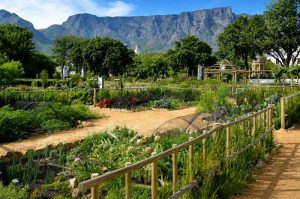
Exploring the Company’s Garden is like stepping into a peaceful green oasis in the heart of Cape Town. Surrounded by some of the city’s most important historic buildings, this beautifully landscaped garden offers a welcome escape from the busy streets of the city centre.
The Company’s Garden dates back to the 17th century, when it was established by the Dutch East India Company as a vegetable garden to supply fresh produce to ships travelling along the important maritime route around the Cape. What began as a practical vegetable garden eventually developed into one of Cape Town’s most historic public spaces.
Today, the garden is a pleasant place to explore on foot, with tree-lined pathways, lawns, flowerbeds, fountains and ponds. Some of the trees are remarkably old, reflecting the garden’s long history.
As you walk through the grounds, you’ll encounter a fascinating mixture of nature, history and architecture. Look out for squirrels, birds and other small wildlife among the trees, while the surrounding skyline provides glimpses of Table Mountain.
One of the most interesting aspects of the Company’s Garden is its location. The garden is surrounded by some of Cape Town’s most significant cultural and historical landmarks, including the South African Museum, National Library of South Africa, St George’s Cathedral and the Houses of Parliament.
This makes it easy to combine a stroll through the garden with visits to several important attractions. You’ll also encounter historic statues and monuments as you wander along the paths, providing glimpses into different periods of Cape Town and South Africa’s complicated history.
The garden is ideal for slowing down during a busy sightseeing day. Find a bench beneath the trees, enjoy a coffee or light meal, watch the squirrels and take in the mountain views. It is particularly pleasant in the warmer months when the gardens are full of colour and people are enjoying the lawns and shaded pathways.
For photographers, the Company’s Garden offers something different from Cape Town’s dramatic mountain and coastal scenery. Old trees, historic architecture, statues, flowers and Table Mountain provide plenty of interesting compositions. The garden is also a wonderful place to appreciate the contrast between Cape Town’s historic centre and its natural surroundings.
The Company’s Garden is more than a beautiful city park. It is a living chapter of Cape Town’s history, where centuries-old trees, historic buildings, colourful gardens and the slopes of Table Mountain come together in the heart of the city.
Beaches & the Ocean
8. Spend time at Clifton’s Beaches
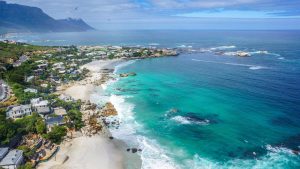
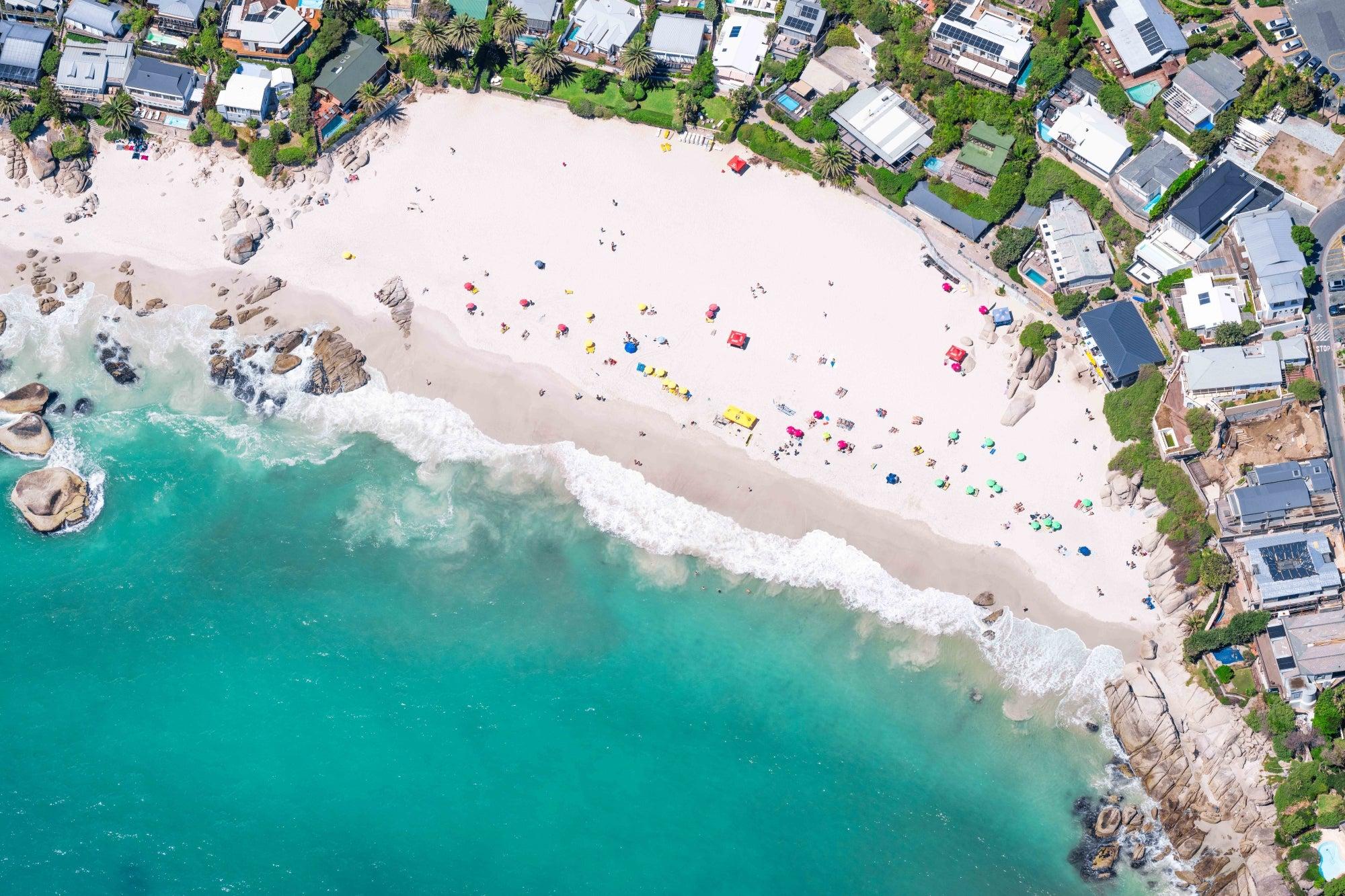
Exploring Clifton’s four beaches is one of the quintessential Cape Town experiences. Tucked beneath the slopes of Lion’s Head and the Twelve Apostles on the Atlantic Seaboard, the four small beaches are separated by enormous granite boulders, each with its own atmosphere and character.
Together, Clifton 1st, 2nd, 3rd and 4th Beach form one of Cape Town’s most beautiful stretches of coastline. The beaches are sheltered from the prevailing south-easterly wind, making them particularly popular during the summer months.
Clifton 1st Beach
First Beach is generally the quieter and more laid-back of the four beaches. It attracts a younger crowd and is popular for beach volleyball, surfing and relaxing on the sand. Its position beneath the mountains gives it a wonderfully secluded feeling, despite being close to the city.
Clifton 2nd Beach
Cross the rocks to 2nd Beach, which is particularly popular with a younger, energetic crowd. The surrounding boulders provide natural protection from the wind, while the deep blue Atlantic creates a spectacular backdrop. It is also a popular spot for swimming, sunbathing and meeting friends.
Clifton 3rd Beach
3rd Beach has a more relaxed atmosphere and is especially popular with the LGBTQ+ community. It is an excellent place to spend a lazy afternoon swimming, sunbathing or simply enjoying the scenery. The enormous granite rocks separating the beaches are also great places to sit and watch the ocean.
Clifton 4th Beach
4th Beach is the largest and most famous of the four beaches and has Blue Flag status, reflecting its high standards for beach management and facilities. It is the beach most associated with the classic image of Clifton: white sand, turquoise-blue water, granite boulders and the Twelve Apostles rising behind it.
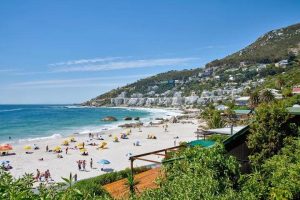
Despite its glamorous reputation, the beach retains a wonderfully relaxed atmosphere. Bring a towel, find a comfortable spot among the boulders and spend the afternoon watching the waves and people enjoying the Cape Town sunshine.
One of the pleasures of Clifton is walking between the four beaches. The huge granite boulders create natural divisions and provide elevated viewpoints across the coastline. The surrounding Atlantic Ocean is famously cold, but that doesn’t stop brave visitors from taking a refreshing swim. On warm summer days, the contrast between the cold water and hot sand is part of the experience.
Clifton is particularly beautiful towards the end of the day. The setting sun illuminates the mountains and turns the ocean golden, while the granite boulders become silhouettes against the evening sky.
Clifton’s four beaches offer four variations on the same extraordinary Cape Town scene: white sand, enormous granite boulders, brilliant Atlantic waters and the dramatic Twelve Apostles rising behind them.”
9. Enjoy Camps Bay
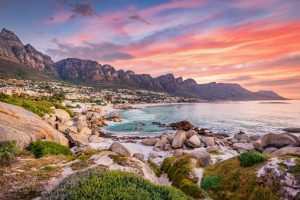
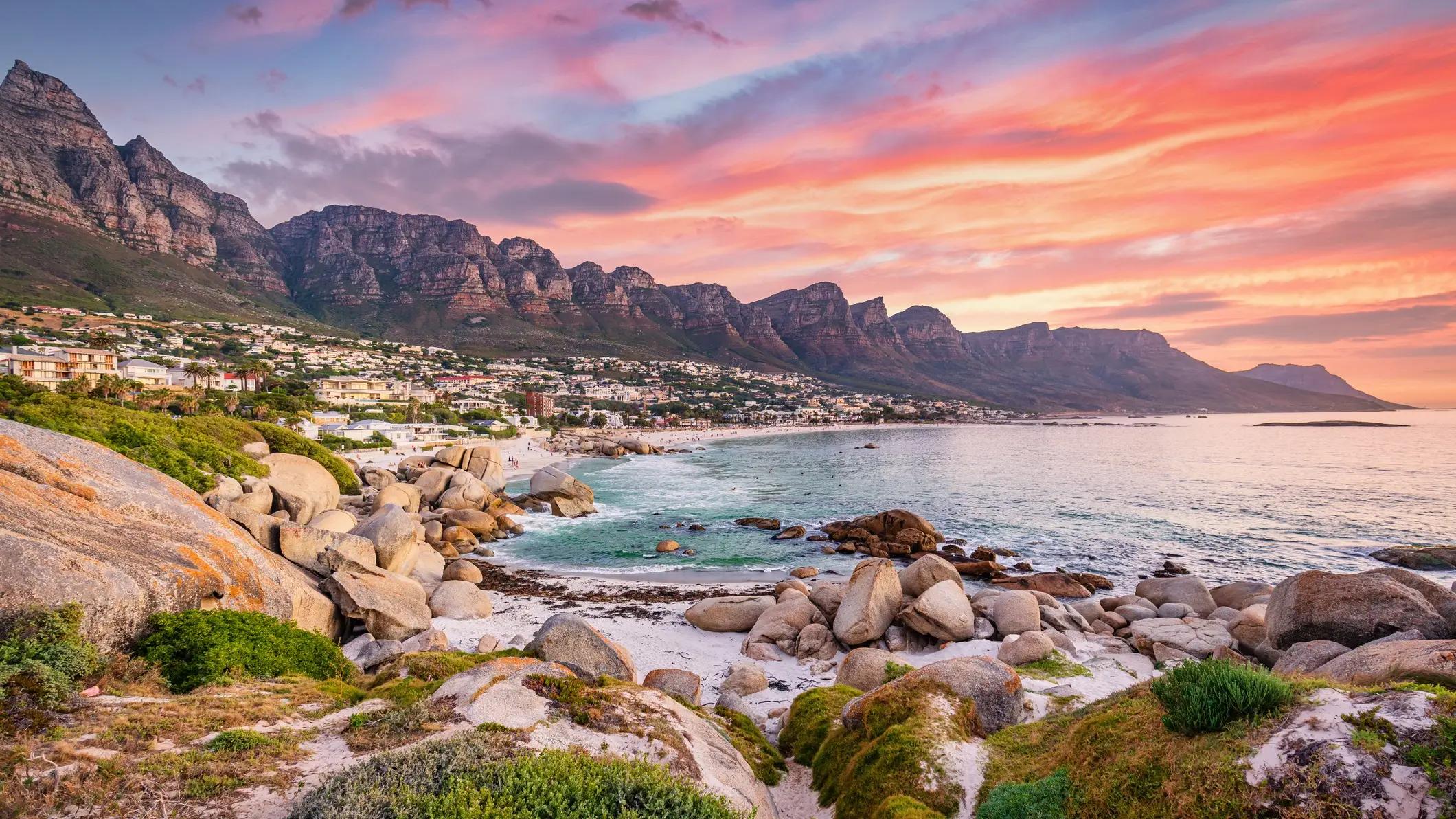
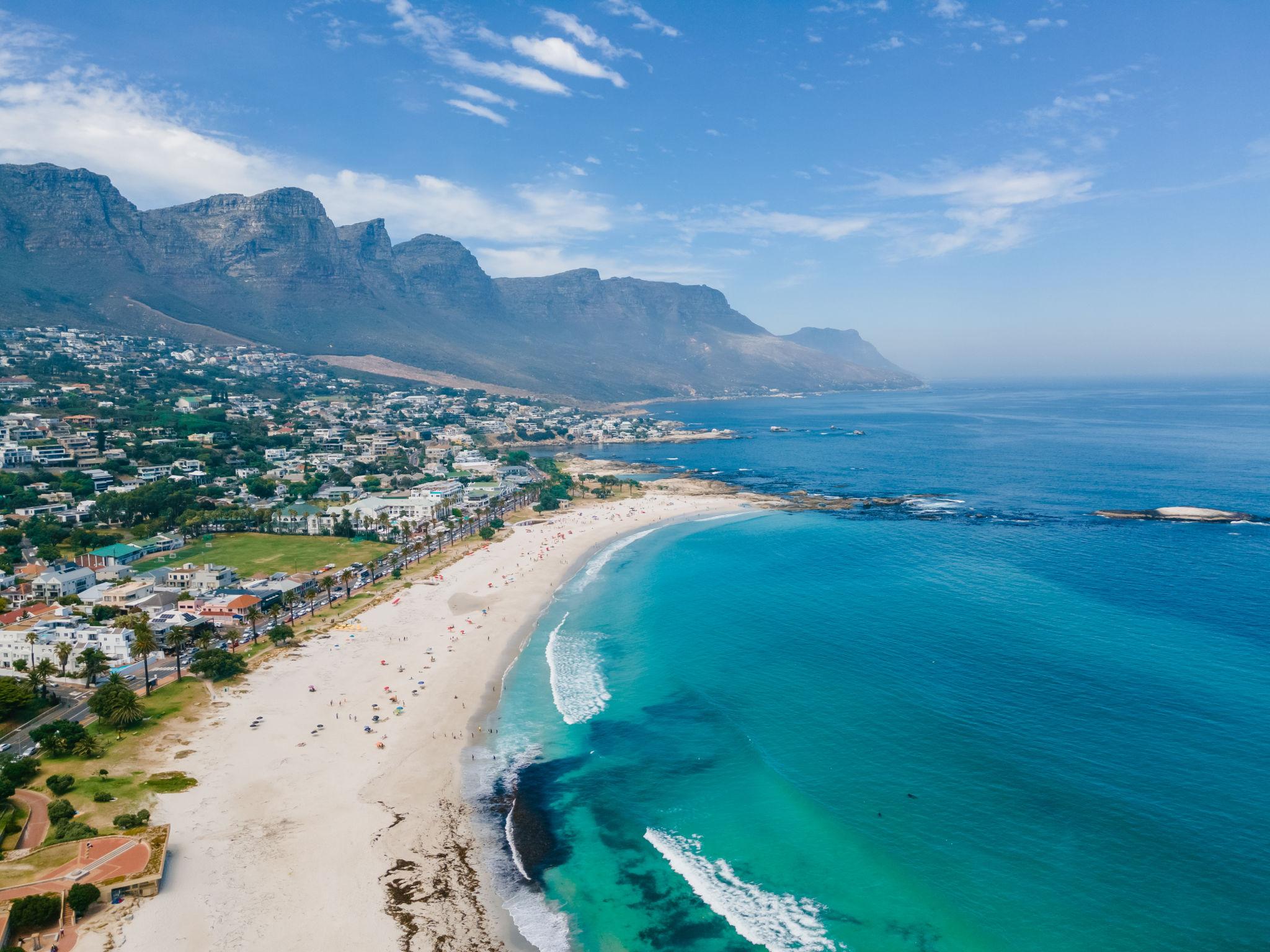
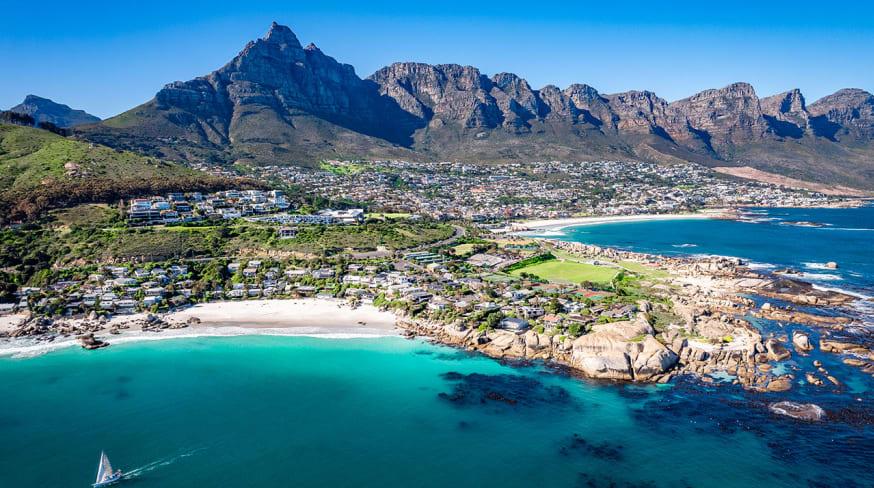
Camps Bay is one of Cape Town’s most glamorous and picturesque seaside neighbourhoods, where a beautiful white sandy beach meets the deep blue Atlantic Ocean with the dramatic Twelve Apostles rising behind it. It is the kind of place where you can spend an entire afternoon doing very little and still feel that you’ve experienced something special.
The centre of Camps Bay is its magnificent beach. Stretch out on the sand, take a walk along the shoreline or simply find a comfortable spot and enjoy the extraordinary combination of mountains, ocean and sky. The water can be chilly, but on a warm summer day it is wonderfully refreshing.
The long sweep of white sand makes the beach ideal for a leisurely day beside the ocean. The backdrop is particularly impressive: the Twelve Apostles form a rugged wall behind the neighbourhood while Lion’s Head rises to the north.
The beach is also a wonderful place for photography, particularly in the early morning when the light is soft or in the late afternoon when the mountains begin to glow.
Just behind the beach is the Camps Bay promenade, lined with restaurants, cafés, cocktail bars and shops. A leisurely walk here gives you excellent views across the ocean and back towards the mountains. It’s a great place to stop for coffee during the day or return later for dinner.
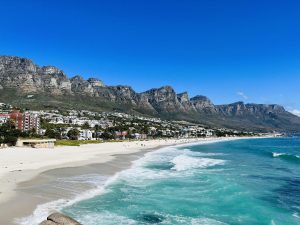
One of Camps Bay’s greatest pleasures is combining the scenery with a meal. Choose a restaurant or café overlooking the beach, order some fresh seafood, pizza, pasta, sushi or a South African favourite, and settle in to watch the world go by. The neighbourhood comes alive towards sunset, when visitors and locals gather along the promenade to enjoy the changing colours over the Atlantic.
Sunset is arguably the best time to experience Camps Bay. As the sun moves towards the horizon, the Twelve Apostles become increasingly dramatic, while the sky and ocean take on shades of gold, pink and orange. Find a spot on the beach, grab a drink at one of the beachfront establishments or simply sit along the promenade and enjoy the spectacle.
Camps Bay is also an excellent base for exploring Cape Town’s mountains. Lion’s Head and Table Mountain are close by, while the Pipe Track provides a scenic hiking route above the neighbourhood. You can easily combine a morning hike with an afternoon on the beach and dinner overlooking the ocean.
Camps Bay brings together many of the things that make Cape Town special: a spectacular beach, dramatic mountains, outdoor activities, good food and unforgettable sunsets.
Camps Bay is where Cape Town’s mountain and ocean landscapes meet in spectacular fashion: a place to spend the day on the sand, stroll beside the Atlantic, enjoy a long lunch and finish the evening watching the sun disappear behind the Twelve Apostles.”
10. Discover Llandudno Beach
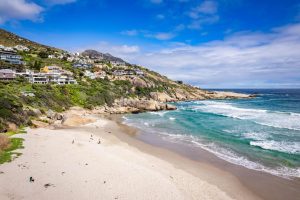
Llandudno Beach is one of Cape Town’s most beautiful and secluded beaches, tucked away between Hout Bay and Sandy Bay on the Atlantic Seaboard. Surrounded by rugged granite boulders and steep mountain slopes, it has a wonderfully natural, unspoilt character that feels far removed from the busier beaches of Camps Bay and Clifton.
The beach is reached by a quiet residential road and a short walk down to the sand. As you arrive, the scenery opens up dramatically: a broad stretch of soft white sand meets the deep blue Atlantic, while the mountains rise behind you.
Llandudno is an excellent place to escape the crowds and simply enjoy the natural surroundings. Spread out a towel on the sand, explore the granite rocks or take a leisurely walk along the shoreline.
The beach is popular with locals, surfers and outdoor enthusiasts, but its relatively secluded location helps maintain a peaceful atmosphere.
The Atlantic water is cold, so swimming is best left to confident swimmers who are comfortable with the conditions. The beach is also exposed to powerful waves and currents, so visitors should take care and pay attention to local safety advice.
Llandudno is well known among Cape Town’s surfing community for its waves and dramatic setting. Experienced surfers can enjoy the powerful Atlantic swells, while the beach is also a beautiful place simply to watch surfers tackling the waves from the shore.
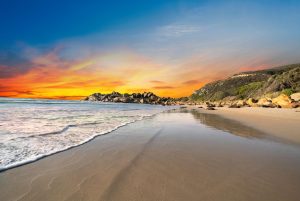
The surrounding boulders provide excellent vantage points for photography. Llandudno is particularly magical in the late afternoon. As the sun begins to sink towards the Atlantic, the beach takes on a warm golden glow and the surrounding mountains become silhouettes.
The combination of white sand, granite boulders, rugged mountains and open ocean creates one of the most beautiful sunset settings on the Cape Peninsula.
Llandudno’s natural setting makes it particularly rewarding for photographers. Unlike some of Cape Town’s more developed beaches, there are relatively few buildings competing with the landscape. From the rocks, you can capture expansive views across the Atlantic, while looking back towards the beach gives you a wonderful perspective of the surrounding mountains.
Llandudno is easy to combine with a drive along the Atlantic Seaboard. A day could include Camps Bay, Hout Bay and Llandudno with stops for photographs and refreshments along the way.
Tucked between mountains and the Atlantic, Llandudno is one of Cape Town’s hidden coastal treasures: a beautiful stretch of white sand where rugged rocks, powerful waves and spectacular sunsets create a wonderfully unspoilt beach experience.”
11. Walking along the Sea Point Promenade
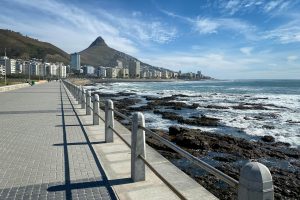
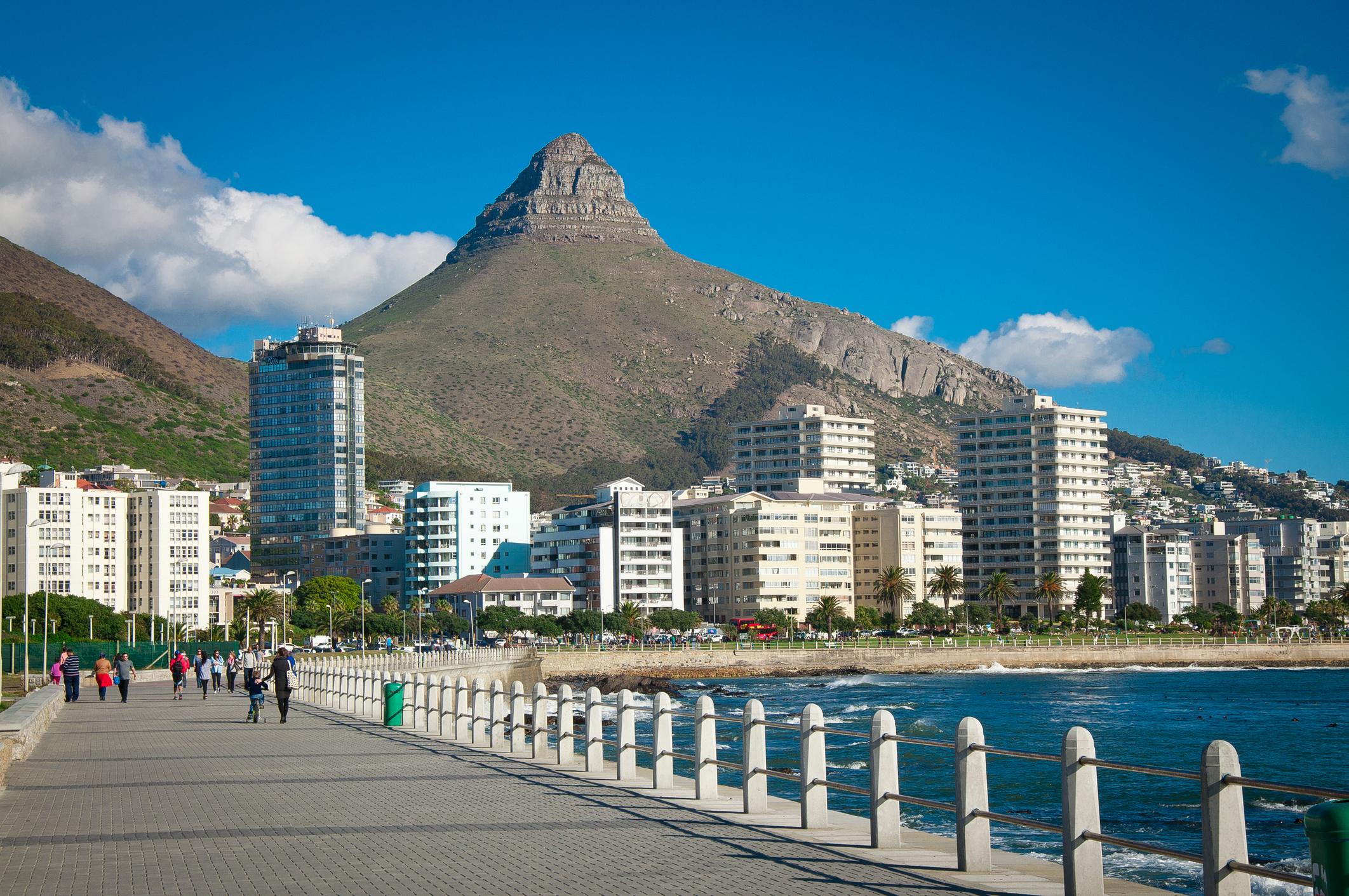
A walk along the Sea Point Promenade is one of the easiest and most enjoyable ways to experience Cape Town’s Atlantic coastline. Stretching along the shoreline between Mouille Point and Bantry Bay, the wide paved promenade offers beautiful ocean views, fresh sea air and a lively atmosphere throughout the day.
Unlike a mountain hike or a long beach walk, the promenade is relatively flat and easy-going, making it ideal for a morning stroll, afternoon walk, jog or relaxed evening outing.
The highlight is, of course, the ocean. As you walk along the promenade, waves crash against the rocky shoreline and you can look across the Atlantic towards the horizon.
On clear days, the views extend towards Robben Island, while behind you are the slopes of Signal Hill and Lion’s Head. The combination of ocean and mountains makes even an ordinary stroll remarkably scenic. The coastline changes as you walk, with rocky pools, small bays, lawns and viewpoints providing plenty of places to stop and enjoy the scenery.
One of the Promenade’s best-known attractions is the Sea Point Pavilion swimming complex, with its historic public pools overlooking the ocean. The pools offer a very different experience from swimming in the Atlantic and are particularly popular during warm weather.
The promenade isn’t just about scenery. It is a place where locals and visitors come together. You’ll see runners, cyclists, families, dog walkers, fitness groups and people simply sitting on the grass watching the waves.
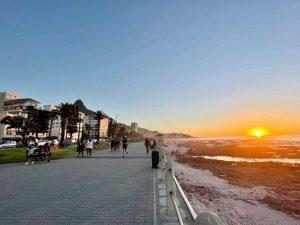
The nearby Sea Point neighbourhood also provides plenty of cafés, restaurants and shops, making it easy to combine your walk with breakfast, coffee, lunch or dinner. The promenade is particularly beautiful towards sunset.
The western-facing coastline gives you an unobstructed view towards the Atlantic, and the evening light can transform the ocean and surrounding mountains. As darkness falls, the lights of Sea Point and the Atlantic Seaboard begin to glow, creating a completely different atmosphere.
Bring your camera because there are countless opportunities for photographs: waves crashing against the rocks, silhouettes of joggers, dramatic skies, Lion’s Head in the distance and the changing colours of the Atlantic.
For an especially peaceful experience, try an early-morning walk, when the Promenade is quieter and the first light falls across the mountains.
The Sea Point Promenade is a wonderful example of how you don’t need to climb a mountain or take an expensive excursion to experience Cape Town’s natural beauty. Simply walking beside the ocean can provide some of the city’s most memorable moments.
With the Atlantic Ocean on one side and Cape Town’s mountains on the other side, a walk along the Sea Point Promenade is a wonderfully simple way to experience the Mother City’s coastline: fresh ocean air, crashing waves, lively neighbourhood life and spectacular sunsets all in one easy stroll.”
12. Visit Muizenberg Beach
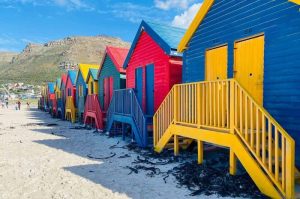
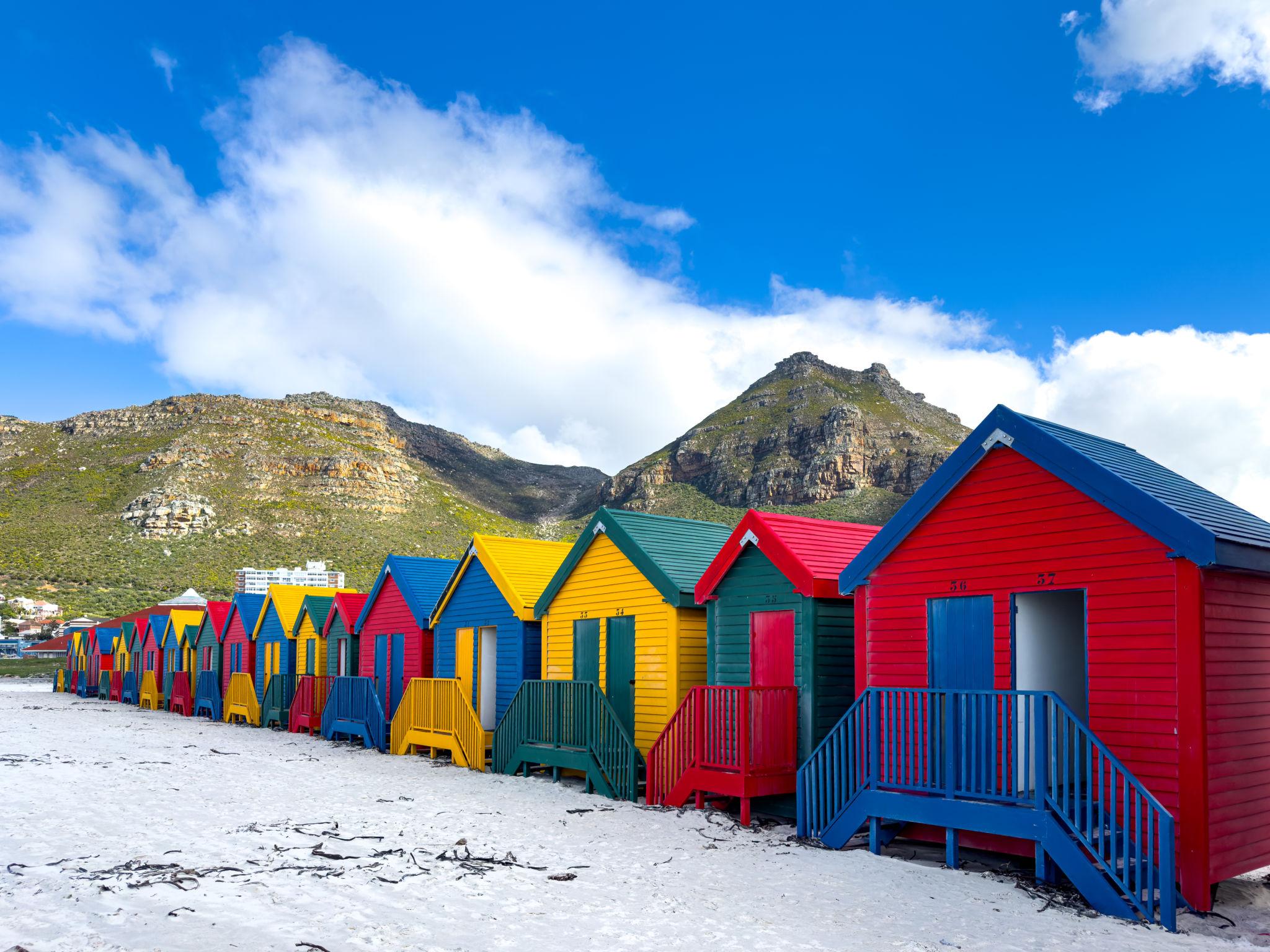
Muizenberg Beach is one of Cape Town’s most colourful and characterful seaside destinations. Situated along the False Bay coastline, about 40 minutes from Cape Town, Muizenberg is famous for its long sandy beach, colourful Victorian-style bathing huts, gentle beginner-friendly waves and relaxed surf culture.
Unlike the dramatic cliffs and rocky shores of Cape Town’s Atlantic Seaboard, Muizenberg has a wonderfully open and welcoming feel. The broad sweep of golden sand stretches along False Bay, with the mountains of the Cape Peninsula providing a magnificent backdrop.
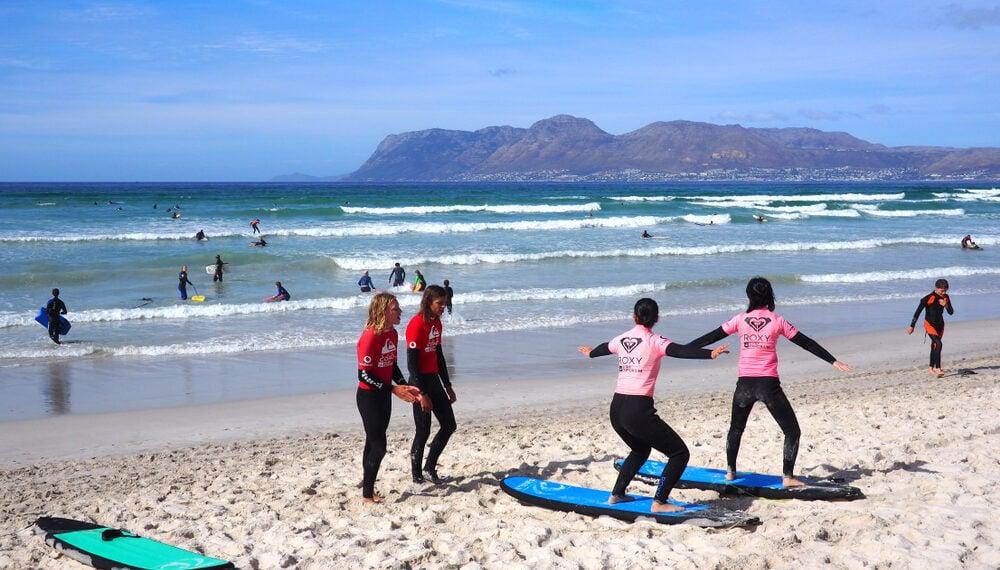
Muizenberg is particularly famous for surfing and is often regarded as one of the best places in South Africa to learn to surf. The long beach and generally manageable waves provide favourable conditions for beginners, while surf schools and rental outlets make it easy for visitors to get started.
Even if you don’t want to get into the water, sitting on the beach and watching surfers ride the waves is part of the Muizenberg experience.
The famous colourful bathing huts are probably Muizenberg’s most recognisable feature. Lined up beside the beach in bright shades, they provide a wonderfully photogenic foreground against the ocean and mountains.
Arrive early in the morning for softer light and fewer people or visit later in the afternoon when the warm sunlight creates beautiful colours across the beach.
The enormous sandy beach is ideal for a leisurely stroll. Walk along the shoreline, watch the surfers, collect shells or simply sit and enjoy the views across False Bay. The surrounding promenade and beachfront area also provide opportunities to stop for coffee, breakfast or something to eat.
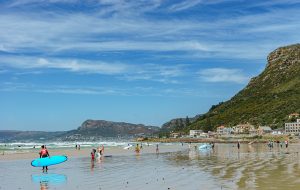
Muizenberg is more than just a beach. The neighbourhood has a distinctive bohemian, artistic and surfing character, with cafés, restaurants, independent shops and colourful historic buildings.
It is also an excellent starting point for exploring the False Bay coastline. From here, you can continue towards St James, Kalk Bay, Fish Hoek and Simon’s Town, creating a wonderful full-day coastal excursion.
Although Muizenberg faces broadly east across False Bay, the changing evening light can still be beautiful, particularly when the mountains and clouds catch the last rays of the day. Early morning can be especially rewarding for photographers, with the rising sun illuminating the beach huts and mountains.
The classic Muizenberg photograph combines the bright bathing huts, sandy beach, surfers, blue water and mountains in one frame. It captures a completely different character from the glamorous Atlantic Seaboard beaches.
Muizenberg is where Cape Town’s colourful beach culture comes alive: a long sweep of golden sand backed by colourful bathing huts, mountain scenery and the unmistakable energy of South Africa’s surfing community.”
13. Explore Kalk Bay
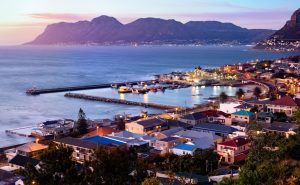
Exploring Kalk Bay is one of the most enjoyable ways to experience the character of Cape Town’s False Bay coastline. This charming seaside village, tucked between the mountains and ocean, combines a working fishing harbour with independent shops, art galleries, cafés, restaurants and a wonderfully relaxed atmosphere.
Unlike some of Cape Town’s more polished tourist destinations, Kalk Bay feels lived-in and authentic. The best way to experience it is simply to park the car, slow down and explore on foot.
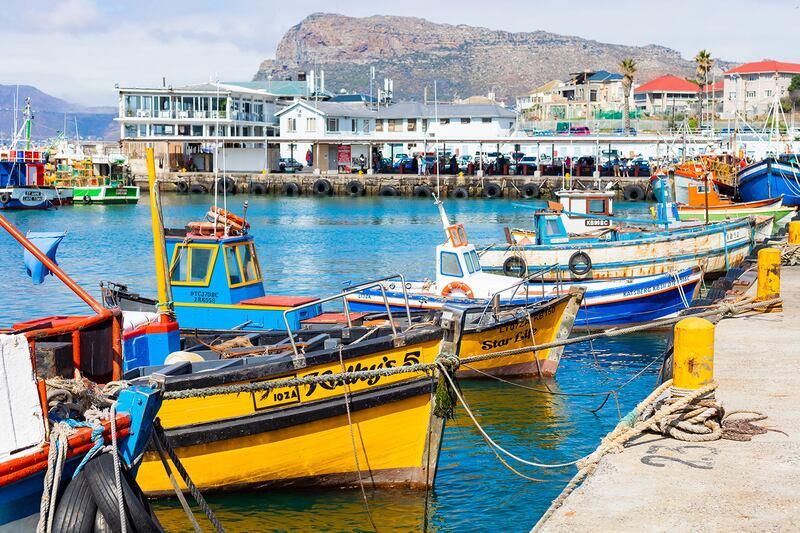
Start at the historic Kalk Bay harbour, where colourful fishing boats bob on the water and fishermen can often be seen working with their daily catch. The harbour is a reminder that Kalk Bay remains connected to its fishing heritage rather than being purely a tourist attraction. Walk along the harbour wall, watch the boats coming and going and look back towards the village and mountains. You may also spot seals swimming around the harbour.
One of Kalk Bay’s great pleasures is wandering along Main Road, where you’ll find an eclectic collection of independent boutiques, antique shops, bookstores, galleries and small cafés. Give yourself time to browse rather than following a strict itinerary. You never quite know what you’ll discover from vintage furniture and African art to clothing, books and quirky gifts.
With its fishing heritage, Kalk Bay is an excellent place to enjoy fresh seafood. Look for fish and chips, grilled fish, calamari and other seafood dishes, ideally accompanied by views of False Bay. The village also has plenty of alternatives, including cafés, bakeries and restaurants serving everything from breakfast and coffee to more substantial meals.
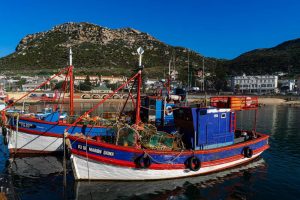
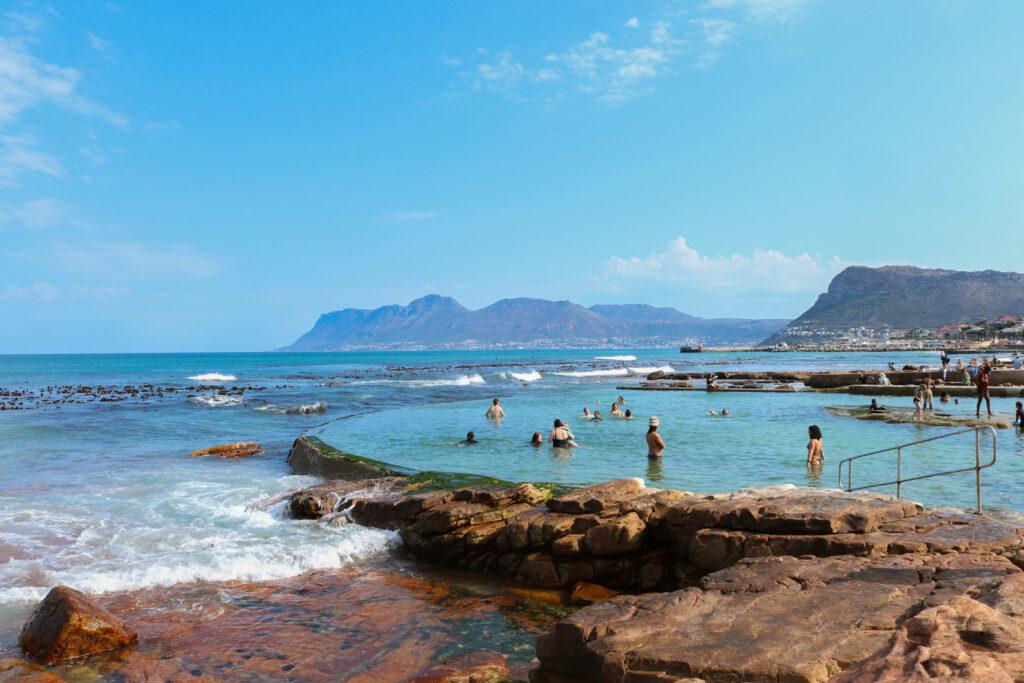
Kalk Bay’s rocky coastline provides plenty of opportunities to stop and enjoy the sea. Dalebrook tidal pool, just along the coast towards St James, is particularly popular with swimmers who enjoy the invigorating False Bay water. The coastal railway line also adds to Kalk Bay’s distinctive character, with trains travelling between the mountains and the ocean.
Kalk Bay is extremely photogenic. Look for fishing boats, old buildings, colourful shopfronts, mountain views, railway tracks and crashing waves. The combination of the historic village and spectacular natural surroundings gives the area a wonderfully cinematic quality.
Towards the end of the afternoon, find somewhere overlooking the water and watch the light change across False Bay and the surrounding mountains. The village becomes especially atmospheric as the evening sets in. Kalk Bay is also a wonderful place to finish a day exploring the southern peninsula before heading back towards Cape Town.
Kalk Bay is the kind of place you don’t simply visit: you wander. Between the fishing harbour, quirky shops, oceanfront cafés and mountains rising behind the village, every turn reveals another piece of Cape Town’s coastal character.
14. Sea Kayaking
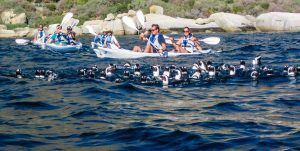
Sea kayaking from Simon’s Town harbour is a fantastic way to experience Cape Town’s coastline from the water. Instead of simply looking out across False Bay from the shore, you paddle into the bay itself, surrounded by mountains, rocky coastline and the open ocean.
Simon’s Town’s sheltered position on the eastern side of the Cape Peninsula makes it a popular starting point for guided kayaking excursions. After a safety briefing and basic instruction, you launch from the shoreline and gradually paddle away from the harbour and beaches.
Once you’re out on the water, the perspective changes completely. Looking back towards the shore, the colourful buildings of Simon’s Town sit beneath the dramatic slopes of the Cape Peninsula.
Paddling along the coastline gives you an opportunity to explore rocky coves, cliffs and small beaches that are difficult to appreciate from land. The rhythm of paddling, the sound of the water and the surrounding mountains create a wonderfully immersive experience.
One of the biggest attractions is the possibility of encountering African penguins around the Simon’s Town and Boulders area. Seeing penguins swimming, diving or resting on rocks while you’re quietly moving through the water can be an extraordinary wildlife experience.
Depending on the season and conditions, you may also encounter seals, dolphins, seabirds and other marine life. Wildlife sightings can never be guaranteed, however, and responsible operators keep an appropriate distance from animals.
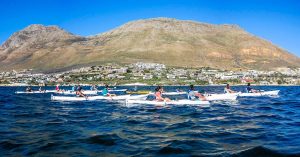
The scenery is a major part of the experience. From the kayak, you can look back towards the mountains of the Cape Peninsula while the vast expanse of False Bay opens out around you. On a clear day, the combination of deep-blue water, rugged mountains and brilliant South African sunshine makes for spectacular photographs.
A guided sea-kayaking trip is generally accessible to people with little or no previous kayaking experience, provided they are comfortable on the water and meet the operator’s requirements.
You’ll normally receive basic paddling and safety instructions before launching, and guides accompany the group throughout the excursion.
Conditions on the ocean can change, so trips are weather-dependent. Always follow the guide’s instructions and wear the provided safety equipment.
Sea kayaking is particularly appealing because it combines several Cape Town experiences in one: adventure, marine wildlife, mountains and ocean scenery.
From the seat of a kayak, Simon’s Town and False Bay take on a completely different character. Paddling quietly along the Cape Peninsula beneath towering mountains, with the possibility of penguins, seals and seabirds nearby, is an exhilarating way to experience Cape Town from the water.
Wildlife & Nature
15. Meet the African Penguins at Boulders Beach

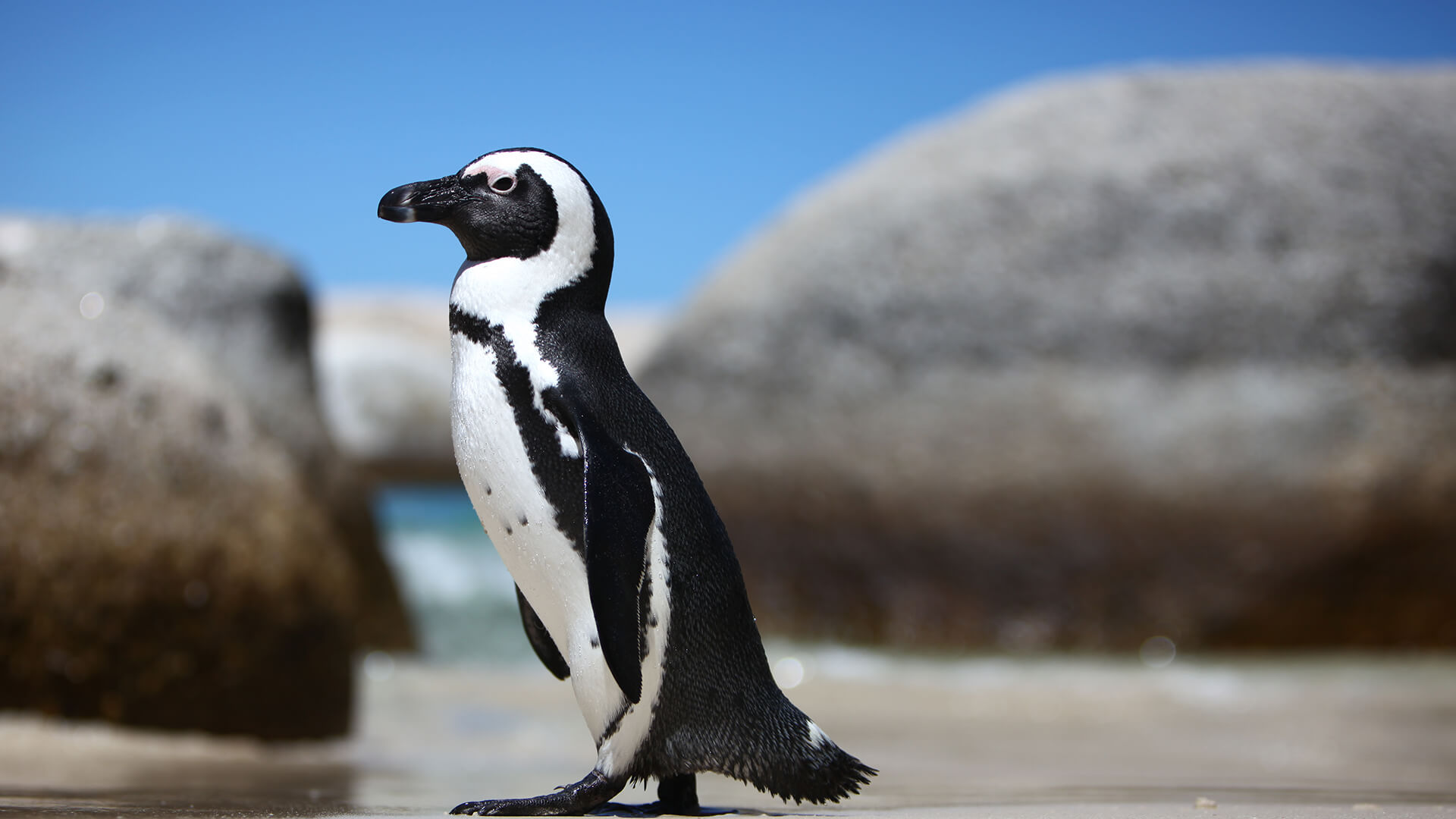
Meeting the African Penguins at Boulders Beach is one of Cape Town’s most memorable wildlife experiences. Located near Simon’s Town along the False Bay coast, Boulders Beach is famous for its sheltered coves, enormous granite boulders and thriving colony of African Penguins.
The experience begins as you walk along the boardwalk through the coastal vegetation. Before long, you may spot your first penguin waddling between the bushes or standing beside the path. Continue towards the viewing areas and the colony comes into view, with penguins resting on the rocks, swimming in the clear water and moving between their nests.
What makes Boulders Beach special is the opportunity to observe these remarkable birds in a natural coastal setting rather than behind glass in a zoo.
African Penguins are excellent swimmers, and watching them launch themselves from the rocks and disappear beneath the waves is particularly entertaining. Back on land, their distinctive waddling gait and expressive behaviour make them fascinating to watch.
During the breeding season, you may see pairs tending their nests or adults returning from the ocean with food for their chicks.
The penguins are only part of the attraction. Boulders Beach itself is spectacular, with large granite boulders protecting small sandy coves from the waves. The clear waters of False Bay, surrounding mountains and sheltered beaches create an extraordinary setting for wildlife photography. There is also a small beach area where visitors can enjoy the scenery, although the main attraction is observing the penguins from designated areas.

Bring a camera with a good zoom lens because there are countless opportunities for photographs. You can capture penguins swimming, preening their feathers, standing on rocks or interacting with one another against the backdrop of False Bay. Remember that the penguins are wild animals. Visitors should never attempt to touch, feed or chase them, even when a curious penguin comes relatively close.
African Penguins are an endangered species, and conservation is an important part of the Boulders Beach experience. The protected environment provides the birds with an important refuge along the Cape Peninsula.
Visiting responsibly: staying on designated paths, keeping your distance and respecting the animals helps protect this remarkable colony for future generations.
At Boulders Beach, one of Cape Town’s most charming wildlife encounters unfolds against an extraordinary coastal backdrop. Watching African Penguins waddle across the rocks, swim through the clear waters and care for their young is an experience that brings you remarkably close to one of South Africa’s most beloved marine birds.
16. Visit Cape Point
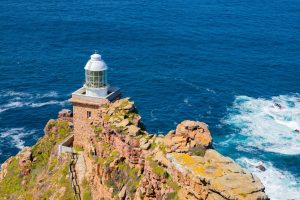
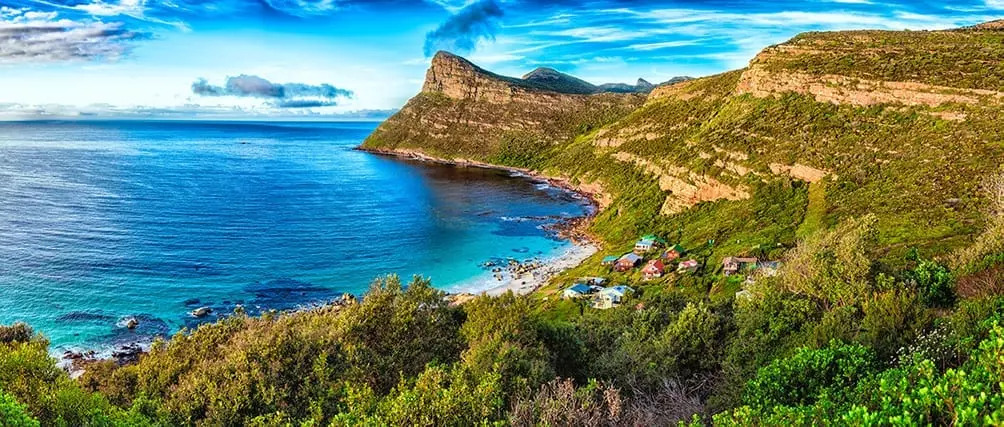
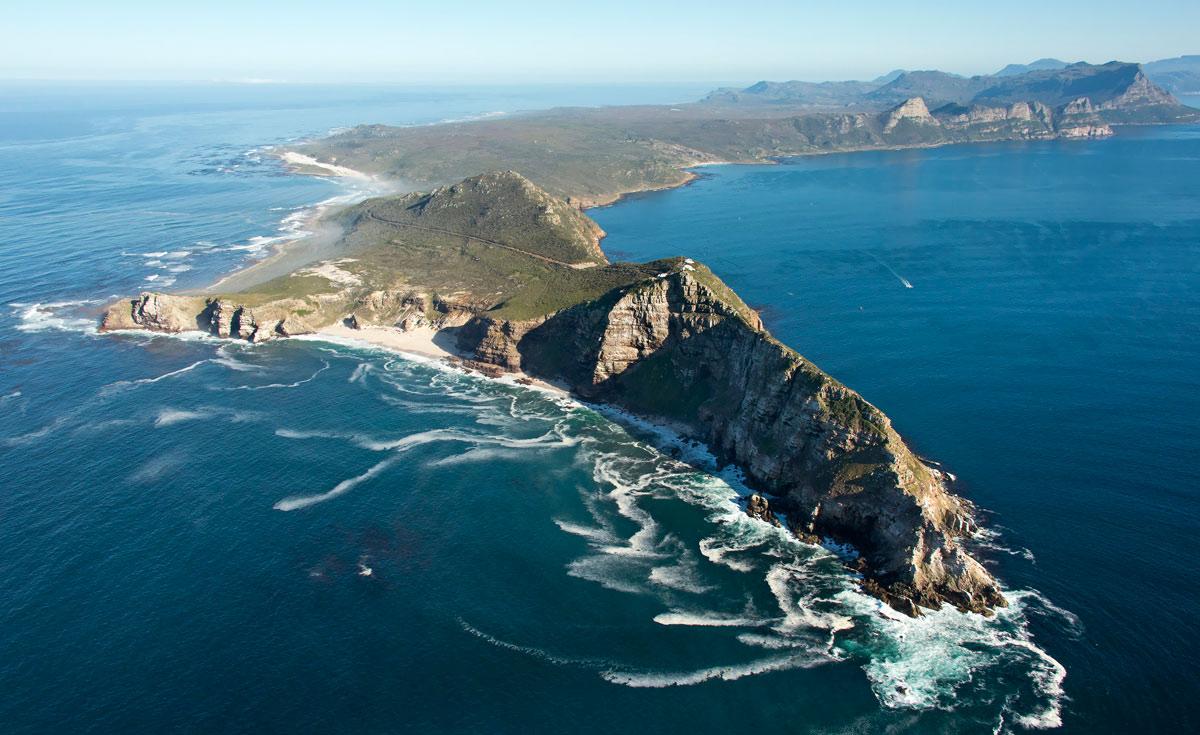
Visiting Cape Point is one of the great highlights of a trip to Cape Town. Located within the spectacular Table Mountain National Park at the southern end of the Cape Peninsula, Cape Point combines dramatic cliffs, wild ocean scenery, indigenous fynbos and fascinating maritime history.
As you travel south through the Cape Peninsula, the landscape gradually becomes wilder. By the time you reach Cape Point, the busy city feels a world away. Rugged mountains rise from the coastline, enormous cliffs drop towards the ocean and the powerful Atlantic and Indian Ocean waters meet around the Peninsula.
One of the most memorable experiences is simply standing on the cliffs and looking out across the vast ocean. From the viewpoints around Cape Point, the coastline stretches dramatically in both directions, while waves crash against the rocks far below.
The scenery changes constantly with the weather. On a calm, sunny day the ocean can appear deep blue and peaceful; when the wind is blowing, the waves and clouds create a much more dramatic landscape.
A popular activity is walking up towards the historic Cape Point lighthouse, perched high above the ocean. The path provides increasingly spectacular views as you climb. For those who would rather avoid the uphill walk, the Flying Dutchman funicular provides an easy ride towards the upper viewpoint.
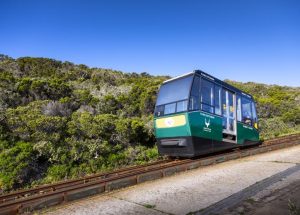
From near the lighthouse, look back along the rugged coastline and across the surrounding fynbos-covered mountains. It is an extraordinary vantage point for photography. Cape Point isn’t simply a viewpoint. The surrounding nature reserve protects a remarkable section of the Cape’s natural environment, including extensive areas of fynbos, the unique vegetation of the Cape Floral Kingdom.
Keep your eyes open for wildlife. Depending on where you explore, you may encounter Cape baboons, ostriches, antelope and over 250 species of birds. The reserve also contains secluded beaches, hiking trails and spectacular coastal viewpoints.
Cape Point is located within the Cape of Good Hope section of Table Mountain National Park, making it easy to combine the visit with the nearby Cape of Good Hope.
Take time to explore the coastline, walk some of the trails and enjoy the feeling of being surrounded by wilderness at the very end of the Peninsula.
Cape Point provides some of the most dramatic photography in the Cape. The combination of towering cliffs, crashing waves, rugged mountains, fynbos and endless ocean make almost every viewpoint spectacular.
Cape Point is where Cape Town gives way to wilderness: a dramatic landscape of towering cliffs, restless oceans, windswept fynbos and historic lighthouses, creating the unforgettable feeling of standing at the edge of Africa.
17. Explore the Cape of Good Hope
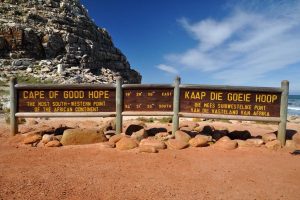
Exploring the Cape of Good Hope is one of the most memorable experiences on the Cape Peninsula. Located within the spectacular Table Mountain National Park, this rugged coastal landscape combines dramatic cliffs, windswept beaches, indigenous fynbos and breathtaking ocean views. It is a place where the power of the Atlantic Ocean and the wild beauty of the Cape are on full display.
The Cape of Good Hope feels wonderfully untamed. As you travel through the reserve, the scenery changes from open fynbos-covered hills to rocky cliffs, secluded beaches and sweeping coastal viewpoints. The Atlantic crashes against the rocks below, while the surrounding mountains create a dramatic backdrop.
The area is particularly beautiful in spring when the Cape’s natural vegetation can burst into colour with seasonal wildflowers. Even outside the flowering season, the diverse fynbos landscape provides a fascinating introduction to the unique vegetation of the Cape Floral Kingdom.
One of the most popular stops is the iconic Cape of Good Hope sign, where visitors often pause for photographs. Standing beside the sign with the rugged coastline behind you provides a memorable reminder that you have reached one of the most southerly points of the Cape Peninsula.
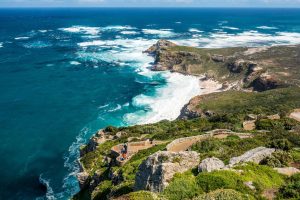
It is worth taking time to explore beyond the sign rather than simply stopping for a photograph. The surrounding coastline offers spectacular viewpoints and opportunities to appreciate the scale and beauty of the landscape.
The Cape of Good Hope is also an excellent place to encounter wildlife in its natural environment. Baboons, ostriches, antelope and a wide variety of bird species can be seen throughout the reserve. Keep a respectful distance from wildlife and never feed or approach animals.
The surrounding ocean is equally rich in marine life. Depending on the season and conditions, visitors may spot seals, dolphins or whales from coastal viewpoints.
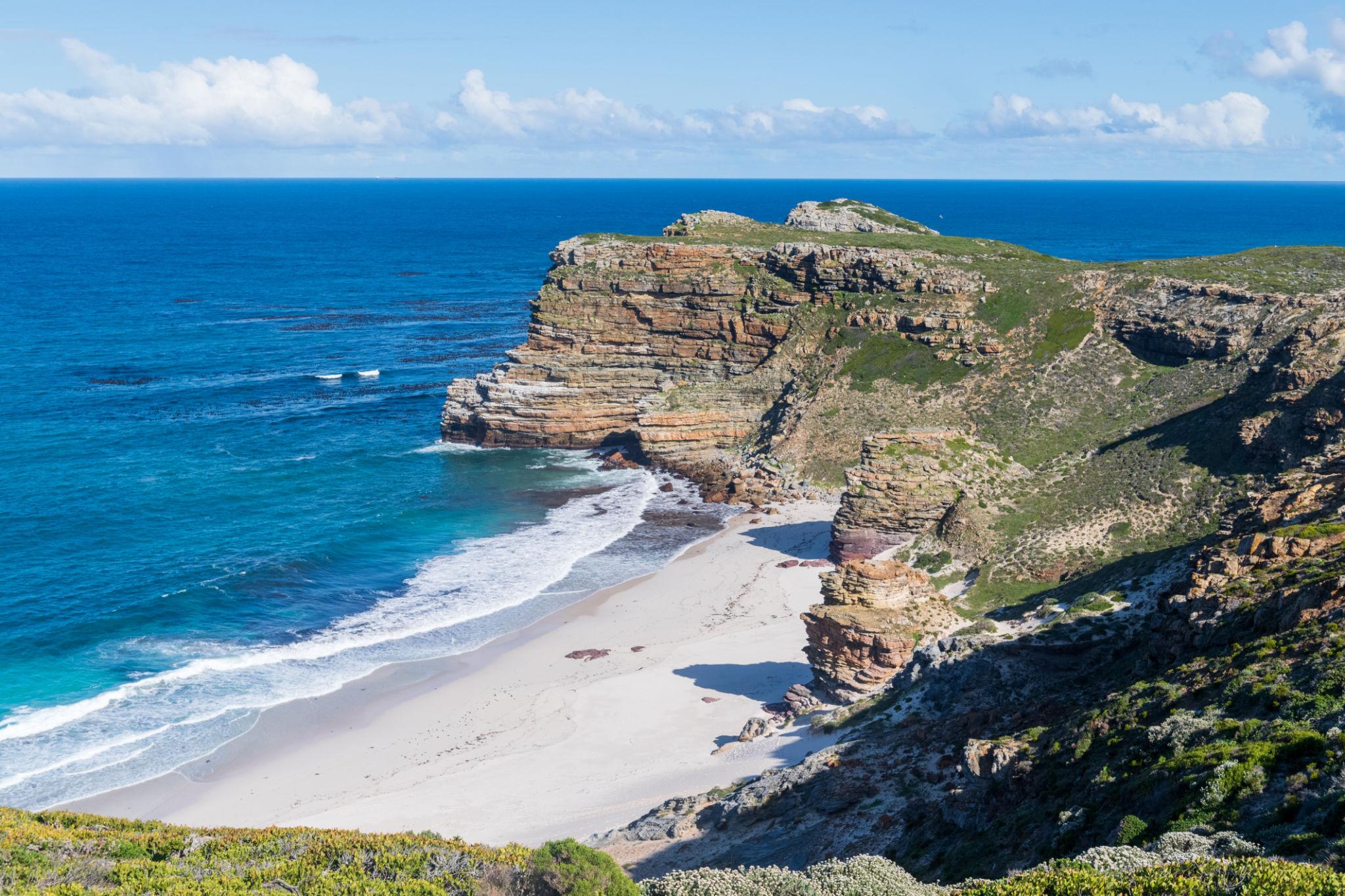
The reserve contains several beautiful beaches and secluded coves. Some, such as Diaz Beach, are surrounded by dramatic cliffs and can be reached by walking trails. The powerful Atlantic surf and cold water make these beaches more suitable for enjoying the scenery than casual swimming.
For photographers, the combination of rugged cliffs, crashing waves, distant mountains and constantly changing light makes the Cape of Good Hope an exceptional location.
Exploring the Cape of Good Hope is much more than ticking off a famous landmark. It is an opportunity to experience the wild side of Cape Town, surrounded by spectacular scenery and the remarkable biodiversity of the Cape Peninsula.
At the Cape of Good Hope, dramatic cliffs meet the restless Atlantic, wild fynbos stretches towards the horizon, and every viewpoint reveals another unforgettable piece of the Cape Peninsula.
18. Visit Kirstenbosch National Botanical Garden
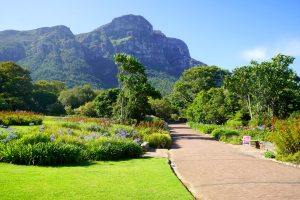
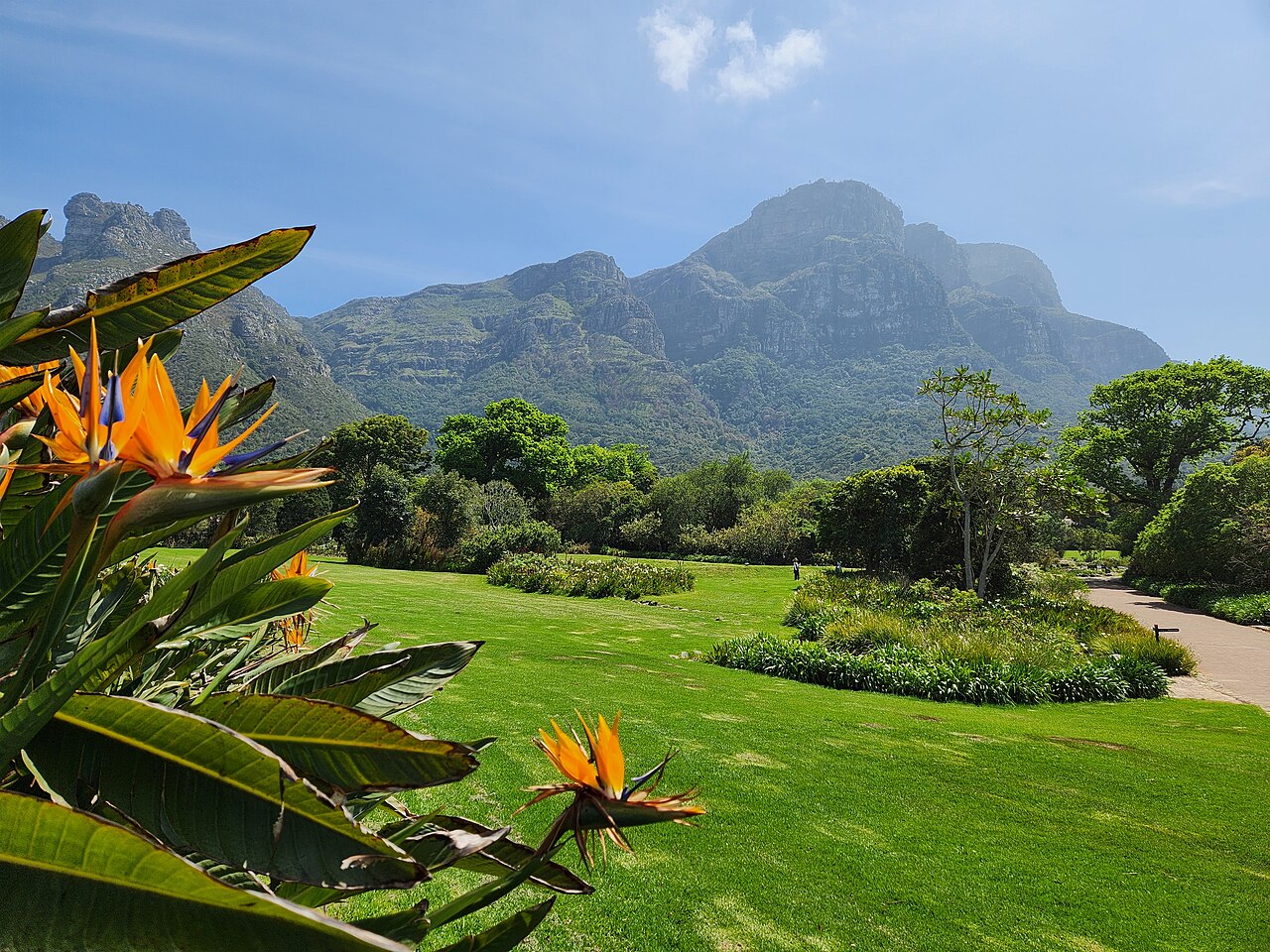
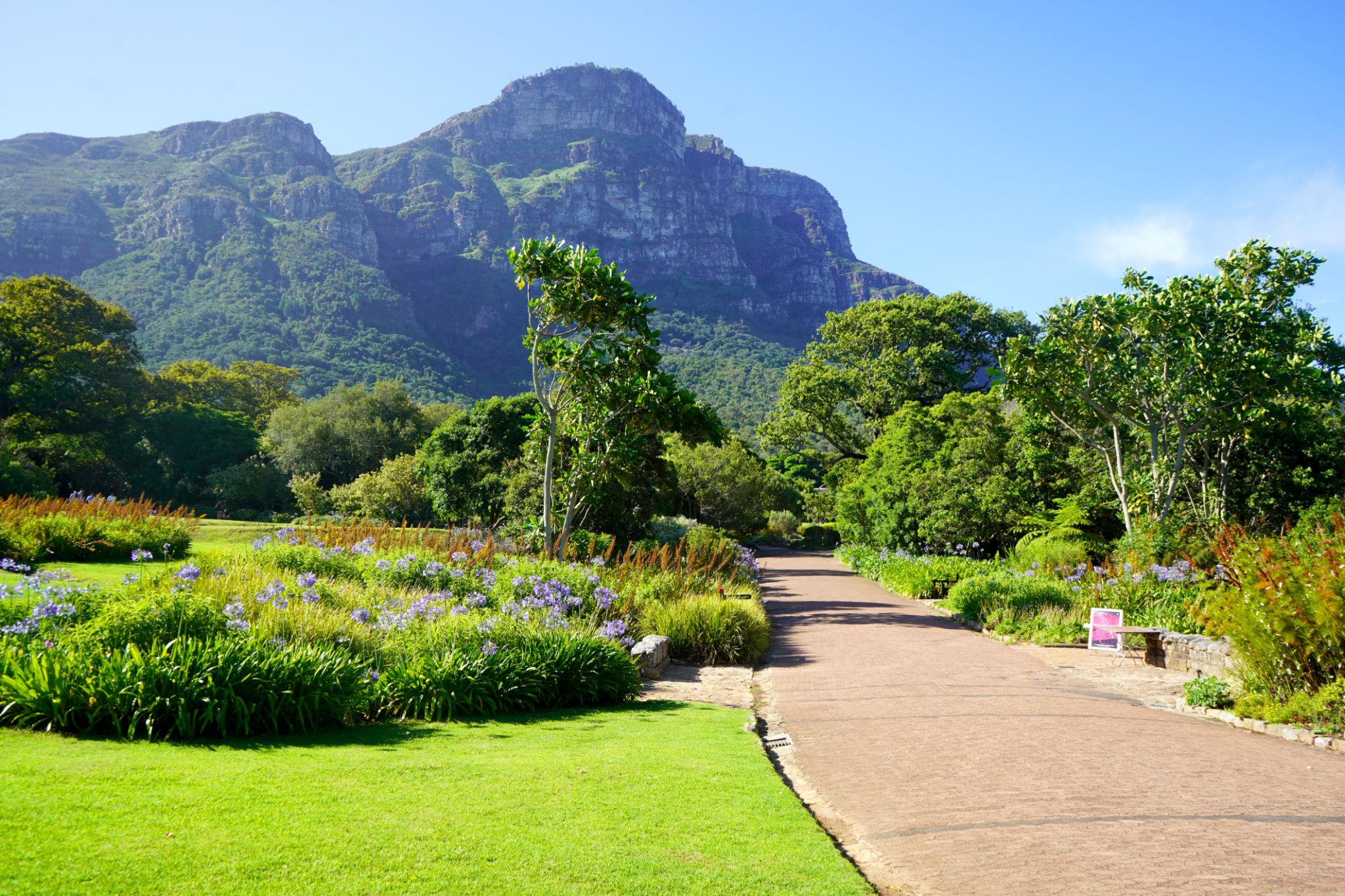
Kirstenbosch National Botanical Garden is one of Cape Town’s most beautiful natural attractions and one of the world’s great botanical gardens. Set against the eastern slopes of Table Mountain, Kirstenbosch is surrounded by spectacular mountain scenery and showcases the extraordinary plant diversity of South Africa.
What makes Kirstenbosch particularly special is its location. Instead of being a formal city garden, it stretches naturally across the lower slopes of Table Mountain, with the mountain rising dramatically behind it.
As you wander along the paths, you encounter beautifully landscaped sections alongside areas of natural indigenous vegetation. Lawns, streams, forests, rocky outcrops and colourful flowering plants create a constantly changing landscape.
Kirstenbosch provides an excellent introduction to the unique vegetation of the Cape Floral Kingdom, one of the world’s richest botanical regions. The garden contains an impressive variety of indigenous South African plants, including proteas, ericas, cycads and many species of fynbos. The King Protea, South Africa’s national flower, is particularly spectacular when in bloom.
The garden is also an excellent place to learn about the importance of conserving South Africa’s unique plant heritage. Kirstenbosch is best experienced at a relaxed pace. Take time to follow the winding paths, explore the different plant collections and stop regularly to appreciate the scenery.
There are also trails leading towards the mountain slopes for visitors looking for a more active experience. Whether you want a gentle garden stroll or a longer walk, there are opportunities to enjoy the natural environment at your own pace.

Kirstenbosch offers countless photographic opportunities. Colourful flowers, unusual plants, ancient trees, mountain scenery and changing light provide an ever-changing backdrop.
The combination of indigenous vegetation and Table Mountain is particularly striking, making Kirstenbosch one of the most rewarding places in Cape Town for nature and landscape photography. Kirstenbosch is not only a place for sightseeing. It is also somewhere to slow down and enjoy the outdoors.
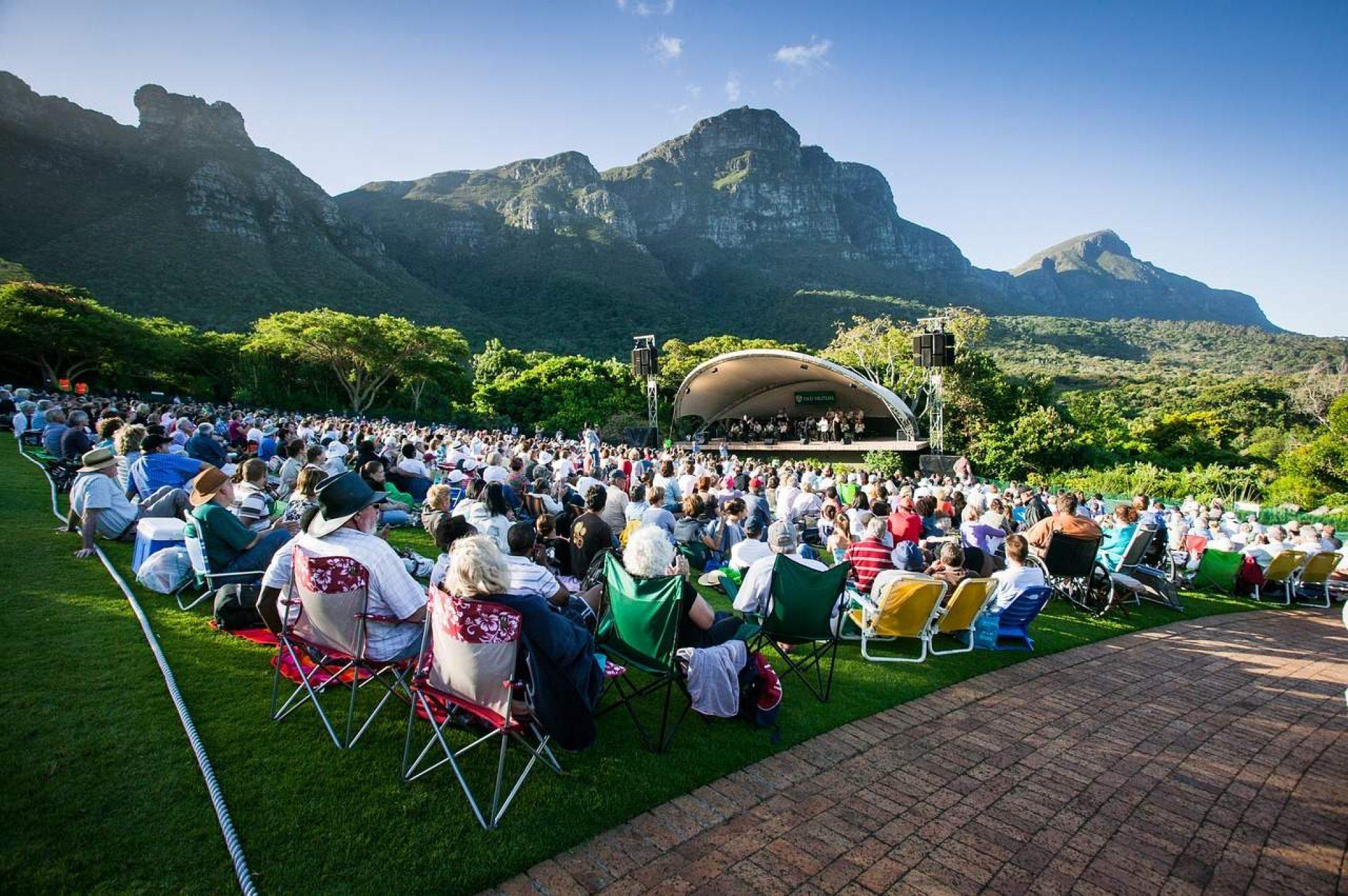
The extensive lawns are ideal for relaxing or having a picnic, while cafés and restaurants provide opportunities to stop for refreshments. During the warmer months, the garden becomes particularly lively, and its famous outdoor summer concerts attract visitors and locals who come to enjoy live music beneath the mountain.
Kirstenbosch is beautiful throughout the year, but spring and summer are particularly rewarding when many of the indigenous plants are flowering. Early morning and late afternoon are also excellent times to visit, when the light is softer and the gardens are often more peaceful.
Allow at least two to three hours for a good introduction to Kirstenbosch, although nature lovers and photographers can easily spend much longer exploring.
Kirstenbosch is much more than a botanical garden. It is a place where Cape Town’s mountains, indigenous flora and outdoor lifestyle come together.
With Table Mountain rising behind a spectacular collection of indigenous plants, Kirstenbosch offers a peaceful escape into the natural beauty of the Cape and one of the most memorable ways to experience South Africa’s extraordinary botanical heritage.
19. Walk along the Kirstenbosch Centenary Tree Canopy Walkway
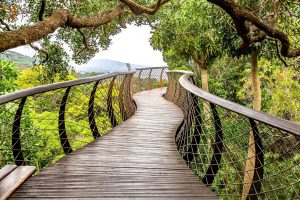
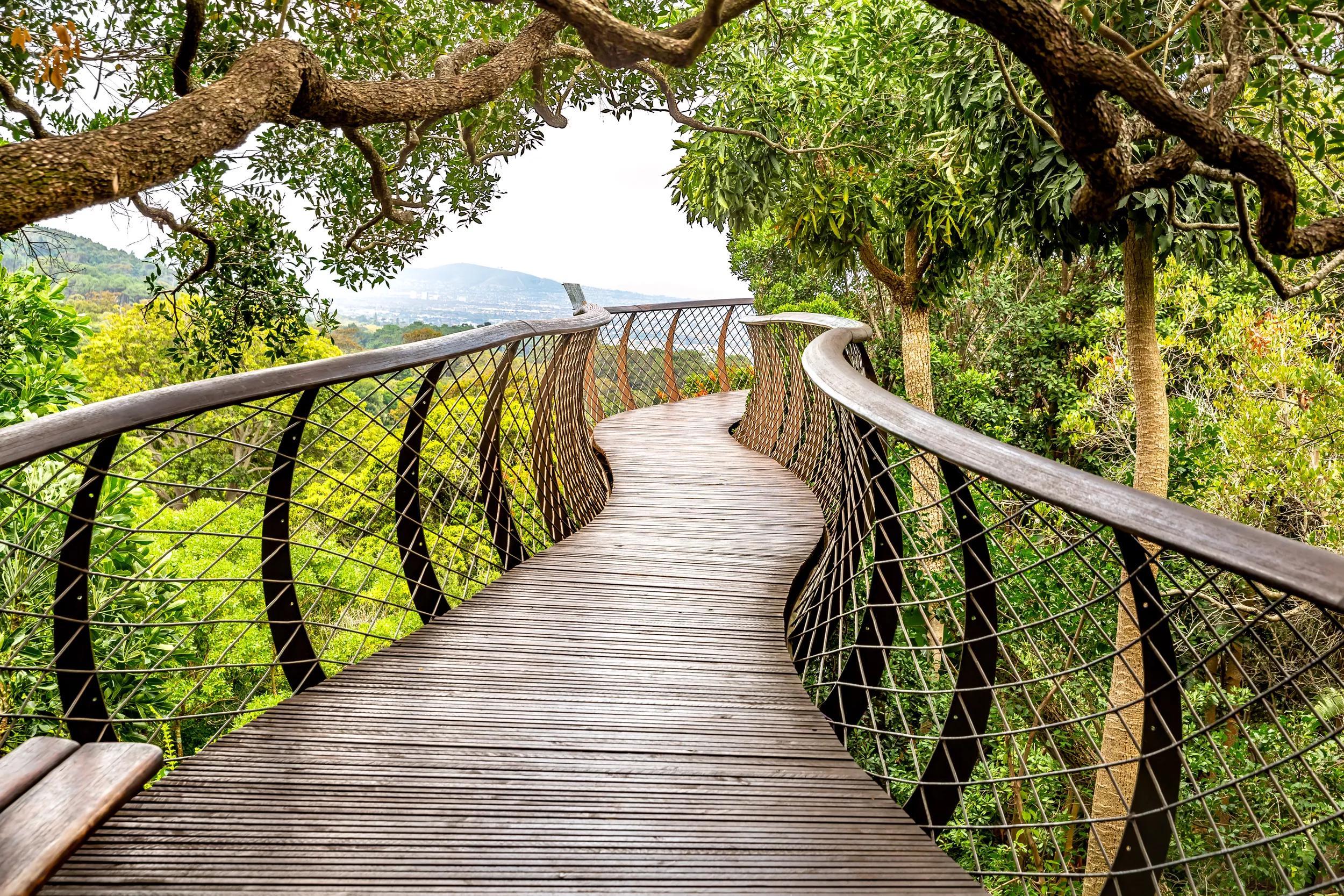
Walking along the Kirstenbosch Centenary Tree Canopy Walkway, affectionately known as the Boomslang, is one of the most enjoyable experiences at Kirstenbosch National Botanical Garden. This elevated walkway winds through the treetops, offering a unique perspective of the gardens while placing you among the branches of the surrounding forest.
The Boomslang rises above the forest floor and curves gently through the canopy. As you walk along the structure, the experience changes from one section to another: from being surrounded by branches and leaves to emerging above the treetops with open views of the gardens.
The walkway is designed to blend into its natural surroundings, creating the feeling of walking through the forest rather than simply looking at it from below.
One of the highlights is reaching the higher sections of the walkway, where the vegetation opens up and Table Mountain provides a magnificent backdrop.
From this elevated position, you can look across the treetops and landscaped gardens towards the mountain slopes. On clear days, the combination of greenery, blue skies and the dramatic outline of Table Mountain makes for excellent photographs.
The Boomslang is particularly rewarding for photographers. Looking through the branches creates interesting natural frames, while the elevated sections provide wide views across Kirstenbosch. Early morning and late afternoon can be especially atmospheric, when the changing sunlight filters through the trees and creates beautiful contrasts between light and shadow.
One of the pleasures of the walkway is simply taking your time. Rather than rushing from one end to the other, pause along the way to listen to birds, watch the movement of the leaves and appreciate the enormous trees around you. It offers a peaceful change of perspective from the formal garden paths below.
The Centenary Tree Canopy Walkway is a gentle adventure suitable for visitors who want to experience Kirstenbosch from above without undertaking a demanding hike. Its relatively easy route makes it a popular attraction for families, photographers and visitors of different ages.
Suspended among the treetops beneath the slopes of Table Mountain, the Kirstenbosch Boomslang transforms an ordinary garden walk into an unforgettable journey through the forest canopy.
20 Go Whale Watching
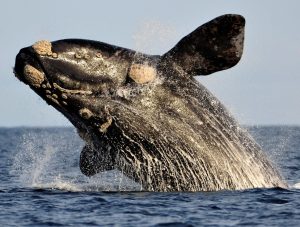
Whale watching in Hermanus is one of the most spectacular wildlife experiences in the Western Cape. Set along the shores of Walker Bay, Hermanus is internationally renowned for its excellent land-based whale watching, particularly during the winter and spring months when Southern Right Whales return to the sheltered waters of the bay.
One of the great advantages of Hermanus is that you don’t necessarily need to join a boat trip to see whales. The town’s famous Cliff Path follows the coastline for 12 kilometres, providing numerous viewpoints overlooking Walker Bay.
During whale season, Southern Right Whales can sometimes be seen surprisingly close to shore. They may surface, blow, roll, breach or raise their tails above the water, creating unforgettable moments for visitors watching from the cliffs. The elevated coastline provides excellent opportunities to observe the whales without disturbing them.
Southern Right Whales are the stars of the Hermanus whale-watching season. These enormous baleen whales migrate from the colder waters of the Southern Ocean to the relatively sheltered coastline of South Africa to mate, calve and raise their young.
Seeing a mother whale with her calf is particularly special. The calves can often be seen swimming close beside their mothers, while adults may rest near the surface or display spectacular behaviours such as breaching and tail-slapping.
Walking the Cliff Path is one of the best ways to experience Hermanus during whale season. The path passes through coastal vegetation and offers changing views of the bay, with benches and lookout points where you can stop and scan the water.
The path also provides beautiful views even when no whales are present, with rugged cliffs, rocky shores and the mountains surrounding Walker Bay.
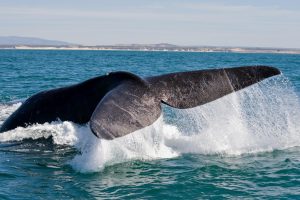
For a closer encounter, visitors can join a guided whale-watching boat trip from the Hermanus harbour. Being on the water provides a completely different perspective and allows you to appreciate the immense size of these animals.
A boat excursion can also provide opportunities to see other marine life, including dolphins, seals and seabirds. Sightings are never guaranteed, however, as whales are wild animals and their movements depend on natural conditions.
The main whale-watching season generally runs through the Southern Hemisphere winter and spring, with whale activity traditionally increasing from around June and continuing into the later months of the year. September and October are often particularly popular times to visit, although the exact timing and number of whales can vary from year to year.
Whale watching has become an important part of Hermanus’s identity. During the season, the town comes alive with visitors hoping to catch sight of these magnificent animals, while cafés, restaurants, galleries and shops provide plenty of opportunities to enjoy the town between whale sightings.
What makes Hermanus so special is the combination of wildlife and scenery. You can stand on a coastal cliff with the mountains behind you, watch enormous whales moving through the waters of Walker Bay and enjoy one of South Africa’s most beautiful coastal towns at the same time.
21. Watch seals in Hout Bay
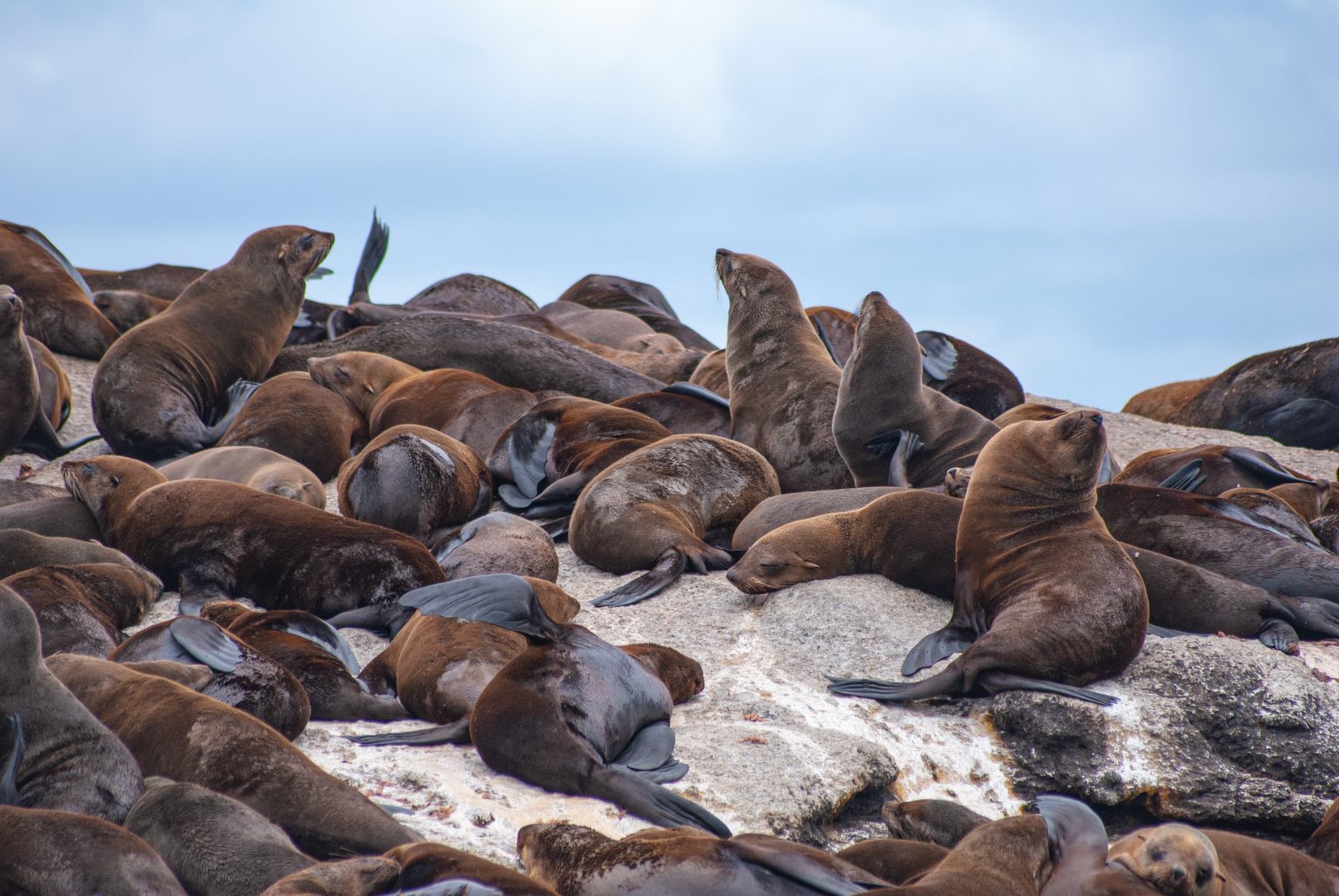
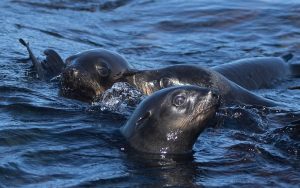 Visiting Seal Island in Hout Bay, in a glass-bottom boat, is a wonderful way to experience Cape Town’s marine wildlife. Just a short boat ride from Hout Bay Harbour, the small rocky island is home to a large colony of Cape fur seals and offers an exciting glimpse into the busy world of these playful marine mammals.
The journey to Seal Island is an experience in itself. Boats leave from Hout Bay Harbour and head across the bay towards the rocky outcrop where thousands of seals can often be found.
As you leave the harbour, you are surrounded by some of Cape Town’s most dramatic coastal scenery. The mountains of the Twelve Apostles rise behind Hout Bay, while the open Atlantic stretches towards the horizon. On a clear day, the combination of deep-blue water, rugged mountains and dramatic coastline makes the trip particularly spectacular.
As the boat approaches the island, you begin to hear the seals before seeing them. The rocks are often covered with seals resting, playing, swimming and interacting with one another.
Some seals lounge motionless on the rocks, while others slip into the water and swim around the boat. Their curiosity and energetic behaviour make them fascinating to watch. The sheer number of animals gathered on such a small rocky island is one of the most impressive aspects of the experience.
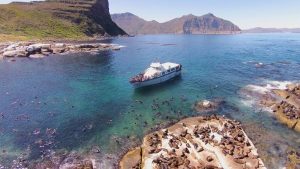
One of the highlights is seeing the seals swimming around the boat. Cape fur seals are exceptionally agile in the water, twisting, diving and accelerating effortlessly beneath the surface. If the water is clear and the seals are active, watching them move through the ocean can be almost as entertaining as watching them on the rocks.
Seal Island provides excellent opportunities for wildlife photography. The seals are often active and expressive, while the surrounding ocean and mountains create a dramatic natural backdrop. A camera with a reasonable zoom lens is useful for capturing the animals from the boat, although simply watching their behaviour can be just as rewarding.
The trip also provides an opportunity to learn more about the marine ecosystem around Hout Bay. The seals are an important part of the local food web and share these waters with numerous other marine species.
Depending on the season and sea conditions, visitors may also encounter seabirds and occasionally dolphins or other marine wildlife. Sightings beyond the seals are naturally not guaranteed.
Seal Island is a relatively short excursion, but it provides a memorable encounter with Cape Town’s coastal wildlife. The combination of a boat ride, thousands of seals, spectacular mountains and the open Atlantic makes it an experience suitable for families, photographers, nature lovers and anyone wanting to see a different side of the city.
22. Visit the Cape’s Wildflower Country
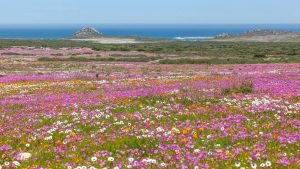
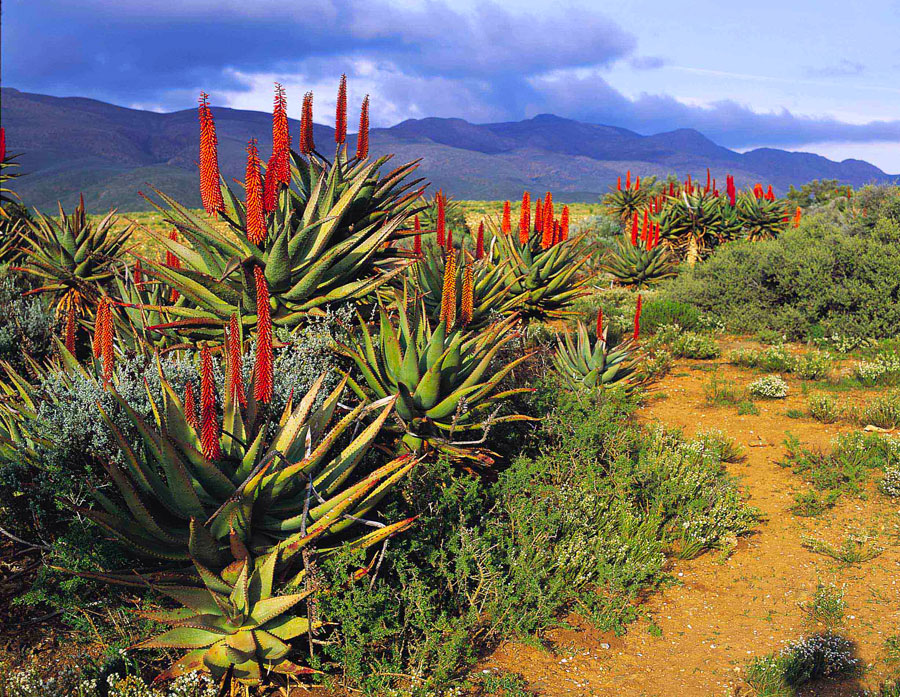
Visiting the Cape’s Wildflower Country is one of the most spectacular seasonal experiences in the Western Cape. Each spring, the normally dry landscapes north of Cape Town are transformed into a vast natural garden, with carpets of colourful wildflowers stretching across fields, hills and coastal plains.
The display is one of nature’s great spectacles and provides a wonderful opportunity to experience the extraordinary botanical diversity of the Cape Floral Kingdom.During the flowering season, winter rains awaken dormant plants across the West Coast. Areas that may appear brown and relatively barren during the dry months can suddenly erupt with colour.
Orange, yellow, white, pink, purple and blue flowers appear among the grasses and low-growing fynbos, creating a constantly changing mosaic across the landscape. The exact timing and intensity of the display depend on winter rainfall and temperatures, which means every flower season is slightly different.
Some of the best-known flower-viewing areas lie along the West Coast, where nature reserves, farms and open countryside provide opportunities to see the seasonal blooms.
West Coast National Park is particularly famous for its spring flowers. During the peak season, sections of the park can become covered in colourful displays, while the nearby Langebaan Lagoon provides a spectacular coastal setting. Further north, the landscapes around the Cederberg and Namaqualand offer additional opportunities to experience the region’s extraordinary floral diversity.
The wildflowers are not simply beautiful. They are part of an extraordinary ecosystem. The Cape Floral Kingdom is one of the world’s major botanical regions and is renowned for its remarkable concentration of plant species.
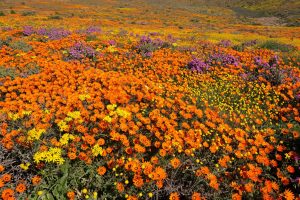
Fynbos dominates much of the landscape, with proteas, ericas, restios and many smaller flowering plants contributing to the incredible variety. For visitors, spring provides a unique opportunity to see this botanical richness at its most colourful.
The flower season is a dream for photographers. Low-growing flowers create colourful foregrounds, while mountains, open plains and the Atlantic coastline provide dramatic backgrounds.
Early morning and late afternoon are particularly beautiful, when the softer sunlight brings out the colours of the flowers and creates depth across the landscape. A macro lens is ideal for capturing individual flowers, while a wider lens can show the scale of the flower-covered countryside.
The best way to experience the flowers is to slow down. Rather than simply driving from one viewpoint to another, stop regularly, walk short trails and look closely at the smaller plants growing among the larger displays. The landscape is alive with more than flowers. Birds, insects, lizards and other wildlife can often be seen among the vegetation, adding another dimension to the experience.
The main wildflower season generally occurs during the Southern Hemisphere spring, particularly from August into September, although the timing varies from year to year and from one region to another.
The Cape’s Wildflower Country makes an excellent day trip or longer excursion from Cape Town. A scenic route along the West Coast can combine flower viewing with coastal villages, beaches, lagoons, seafood and spectacular Atlantic scenery. For visitors who enjoy nature, photography and landscapes, the flower season offers a completely different perspective on the Western Cape.
Scenic drives & adventures
23. Drive Chapman’s Peak Drive in a Cobra
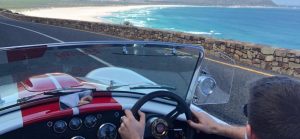
Driving Chapman’s Peak Drive in a Cobra is an unforgettable way to experience one of Cape Town’s most spectacular coastal roads. With the roof down, the sound of the engine behind you and the Atlantic Ocean stretching out below, the famous route between Hout Bay and Noordhoek becomes more than a scenic drive. It becomes an exhilarating Cape Peninsula adventure.
Chapman’s Peak Drive winds dramatically along the mountainside between Hout Bay and Noordhoek, with sheer cliffs rising on one side and the Atlantic Ocean dropping away on the other side.
The road curves around the contours of the mountain, revealing spectacular views at almost every turn. In a Cobra, the experience feels particularly immersive: the wind, ocean air and changing scenery are all part of the journey. A Cobra brings an unmistakable sense of occasion to the drive. Its classic styling, open cockpit and distinctive engine note make even a short journey feel like a special motoring experience.
Rather than simply looking through a car window at the scenery, you become part of it. The cool Atlantic breeze, dramatic mountain walls and panoramic ocean views surround you as you follow the winding road. The Cobra is also a fantastic conversation starter. Its classic appearance tends to attract attention wherever you stop, making the experience as memorable for the vehicle itself as for the scenery.
One of the best ways to enjoy Chapman’s Peak Drive is to take your time. There are designated viewpoints where you can safely stop, step out and appreciate the enormous scale of the landscape.
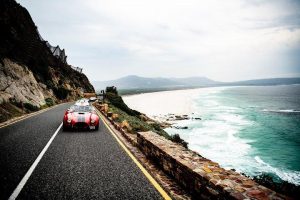
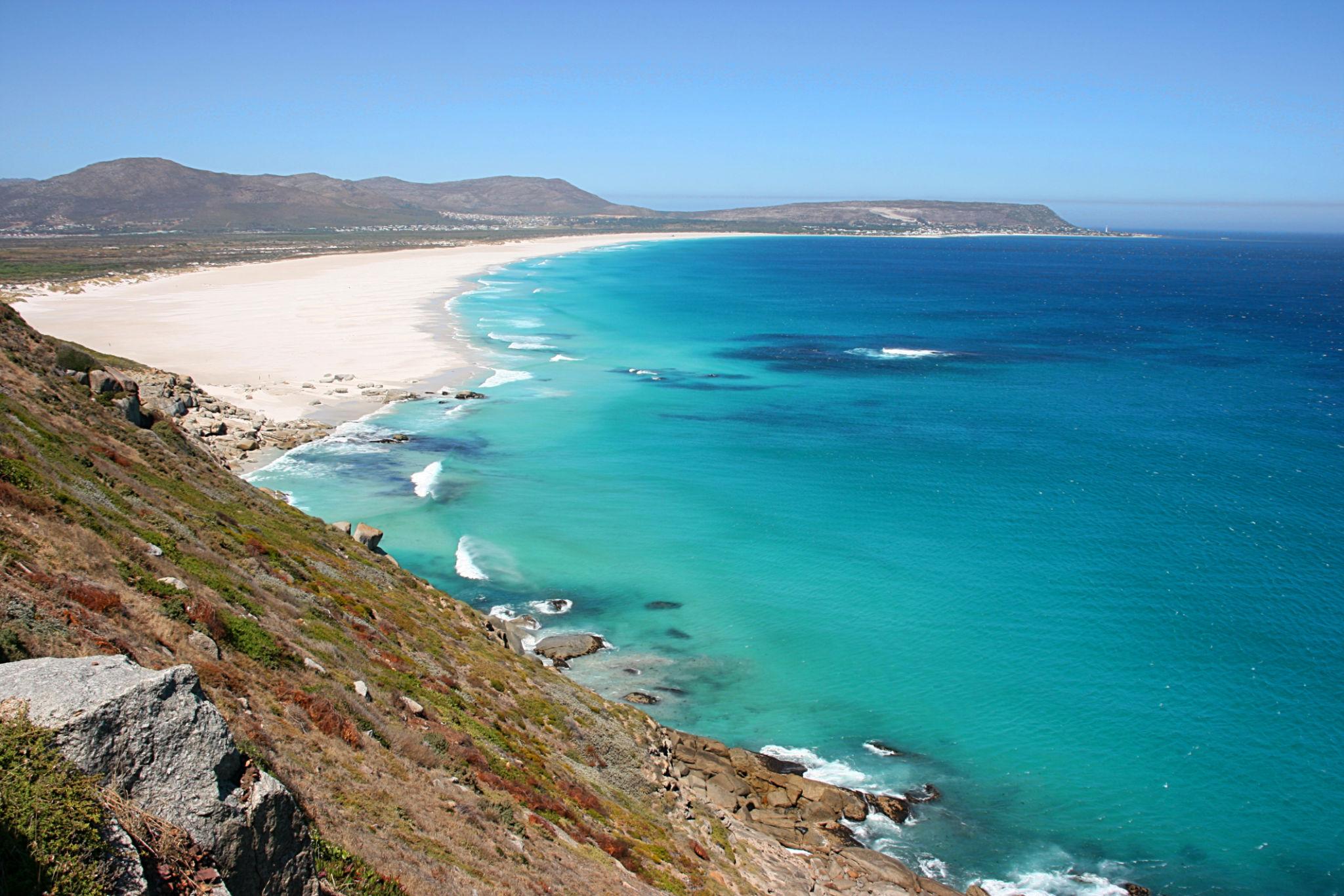
Looking back towards Hout Bay, the coastline curves dramatically beneath the Twelve Apostles. Looking towards Noordhoek, the road disappears around the mountains with the long sweep of Noordhoek Beach visible in the distance. These stops are perfect for photographs of the Cobra against the Atlantic coastline.
From Hout Bay, Chapman’s Peak Drive climbs into the mountains before following the spectacular coastline towards Noordhoek. Once you emerge from the mountain pass, the landscape opens dramatically onto Noordhoek Beach and the surrounding countryside. The drive can then continue towards Kommetjie, Scarborough and the Cape of Good Hope, making it an ideal part of a Full Day Private Cape Peninsula Tour.
Late afternoon can be particularly magical. As the sun begins to descend towards the Atlantic, the cliffs and ocean are bathed in warm golden light. Driving a Cobra with the top down at this time of day creates an atmosphere that combines classic motoring with one of Cape Town’s most beautiful natural settings.
Chapman’s Peak Drive is impressive in any vehicle but experiencing it in a classic Cobra adds another layer to the adventure. It is the combination of iconic car, spectacular road, dramatic mountains and endless ocean that makes this such a memorable Cape Town experience. The drive is best enjoyed without rushing—stop at the viewpoints, take photographs, enjoy the scenery and savour the road itself.
24. Drive Clarence Drive
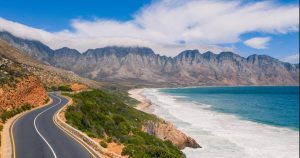
Driving Clarence Drive is one of the Western Cape’s great scenic road trips, combining dramatic mountain landscapes, sweeping views across False Bay and a spectacular coastline. Running between Gordon’s Bay and Rooi-Els, this winding coastal road offers a quieter and less crowded alternative to some of Cape Town’s better-known scenic drives.
Clarence Drive follows the rugged eastern slopes of the Hottentots Holland mountain range, with the mountains rising steeply on one side and False Bay stretching out below. The road curves around rocky mountainsides and through natural fynbos, repeatedly revealing panoramic views of the ocean. On clear days, the visibility can be extraordinary, with the coastline appearing to stretch endlessly towards the Cape Peninsula.
The drive is particularly enjoyable when beginning in Gordon’s Bay. As you leave the town behind, the road quickly becomes more dramatic. The built-up coastline gives way to rugged mountains, cliffs and open ocean, creating a feeling of travelling through a remote coastal landscape despite being relatively close to Cape Town.
Clarence Drive is not a road to rush through. There are several places where you can safely stop and take in the scenery. Look back towards Gordon’s Bay for magnificent views across False Bay, while the rocky coastline below provides excellent opportunities for photography. The changing weather and light can transform the landscape from one moment to the next.
The mountains surrounding Clarence Drive form part of the Cape’s extraordinary fynbos landscape. Depending on the season, the roadside vegetation can be filled with flowering plants and colourful wildflowers.
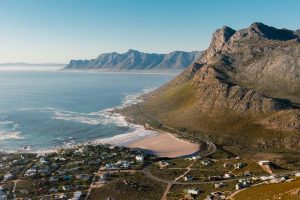
Spring can be particularly beautiful, when sections of the mountainsides come alive with indigenous flowers. Keep an eye out for proteas and other characteristic Cape plants as you travel through the area.
During the whale season, the coastline around False Bay and the Overberg can provide opportunities for spotting Southern Right Whales from elevated viewpoints. Keep your eyes on the water as you travel, particularly between winter and spring. A pair of binoculars can be useful, although whale sightings are never guaranteed.
The drive becomes increasingly scenic as you approach Rooi-Els, with rugged coastline and dramatic mountain scenery dominating the landscape. From there, the route continues towards Betty’s Bay and Pringle Bay, making Clarence Drive an excellent component of a longer Cape coastal road trip.
Betty’s Bay also provides the opportunity to visit the Stony Point African Penguin Colony and Harold Porter National Botanical Garden, adding wildlife and nature to the scenic journey.
Clarence Drive is especially enjoyable for those who appreciate the journey as much as the destination. The winding road, mountain passes, ocean viewpoints and small coastal communities create a relaxed sense of adventure.
25. Take a Helicopter Flight over Cape Town
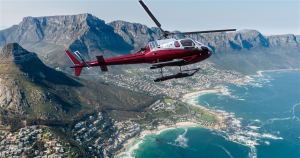
Taking a helicopter flight over Cape Town is one of the most spectacular ways to appreciate the city’s extraordinary setting. From the air, the familiar landmarks of Cape Town become part of one enormous landscape, with Table Mountain, the Atlantic Ocean, beaches, mountains and the city unfolding beneath you.
A helicopter flight is not simply a sightseeing trip. It is an exhilarating experience that provides perspectives of Cape Town that are impossible to appreciate fully from the ground.
As the helicopter lifts off, Cape Town quickly transforms below you. The city’s streets and buildings become smaller as the helicopter rises, revealing the relationship between the city, Table Mountain and the surrounding coastline. From this elevated perspective, you can see how dramatically Cape Town is positioned between mountain and ocean.
One of the great highlights is seeing Table Mountain from the air. Rather than looking up at its famous flat summit, you fly alongside and around the mountain, revealing its cliffs, ravines and enormous scale. The Twelve Apostles extend dramatically along the Atlantic coastline, while the slopes of the mountain descend towards the suburbs and beaches below. The changing perspective makes familiar landmarks look completely different.
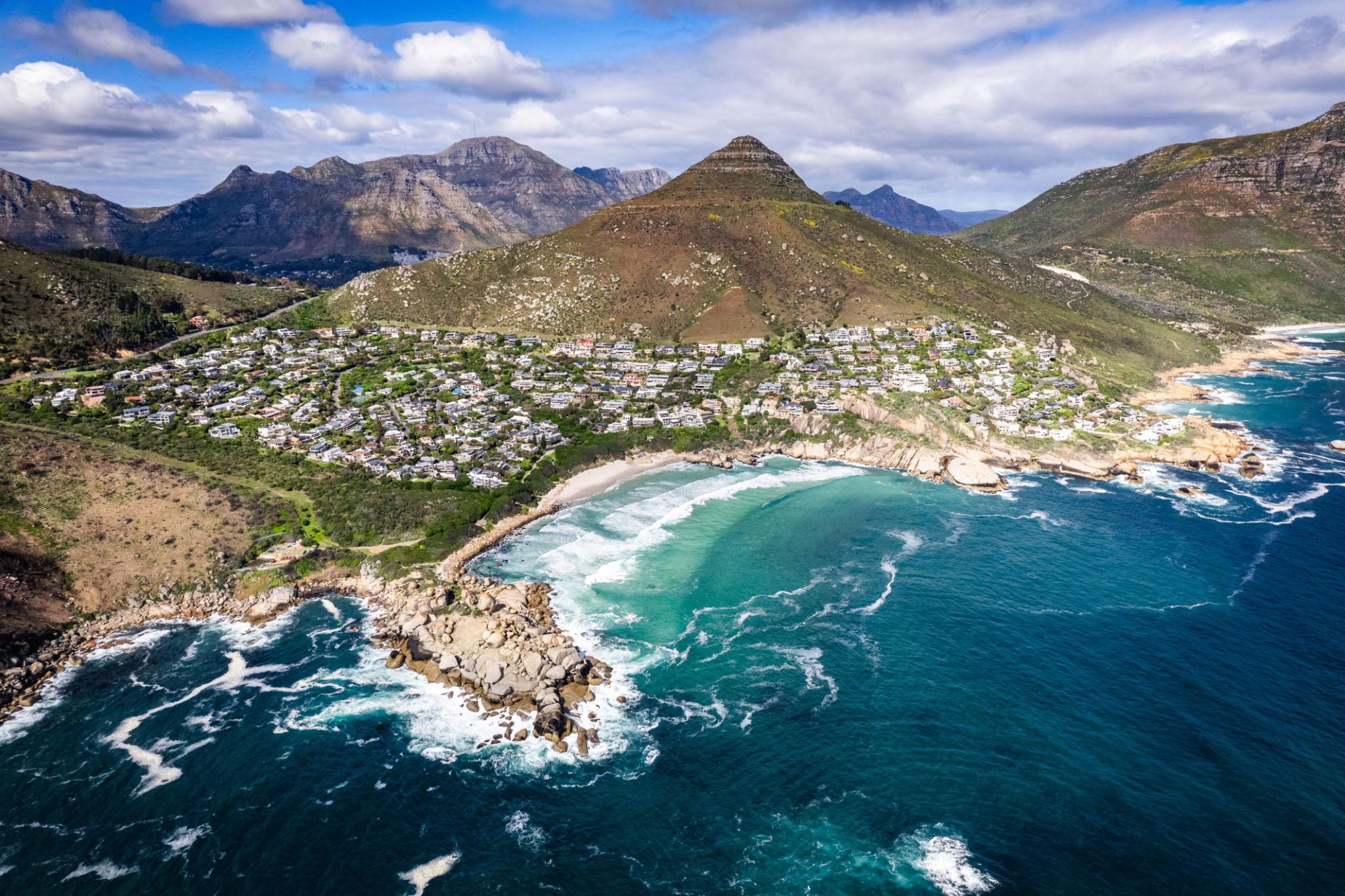
A coastal flight provides magnificent views of Cape Town’s beaches and rugged Atlantic shoreline. From above, beaches such as Clifton, Camps Bay and Llandudno appear as strips of white sand surrounded by deep-blue ocean and dramatic mountains. The coastline curves away towards Hout Bay and Chapman’s Peak, creating an extraordinary aerial panorama.
On a clear day, the contrast between the mountains, turquoise shallows and darker Atlantic waters is particularly striking. The helicopter also provides an impressive bird’s-eye view of Cape Town itself. The city’s neighbourhoods, roads, parks and landmarks spread out beneath you, framed by mountains and ocean.
You can appreciate the scale of the city in a way that is difficult to achieve from ground level, while landmarks such as the V&A Waterfront and Cape Town Stadium become instantly recognisable from above.
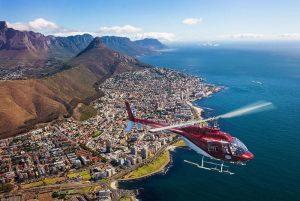
For photographers, a helicopter flight offers exceptional opportunities. There are constantly changing compositions as the aircraft moves between the mountains, coastline and city. The best views depend on the flight route, weather and time of day, but golden-hour flights can produce particularly beautiful light across the mountains and ocean.
Helicopter operators offer different flight experiences, from short flights around Table Mountain and the Atlantic seaboard to longer excursions along the Cape Peninsula. Some routes can take you beyond the city towards Cape Point, giving you an opportunity to see the dramatic peninsula from the air. The exact route depends on the operator, weather, air-traffic conditions and the flight package selected.
A helicopter flight is an ideal experience for visitors celebrating a special occasion, photographers looking for a unique perspective, or anyone wanting to see Cape Town from an entirely different angle. Even if you have explored the city extensively from the ground, seeing it from the air reveals just how spectacularly nature and urban life are intertwined.
26. Paraglide from Signal Hill
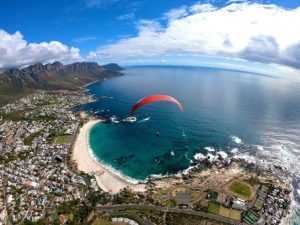
Paragliding from Signal Hill is one of the most exhilarating ways to experience Cape Town. Launching from the slopes above the city, you glide out over the Atlantic coastline with spectacular views of Table Mountain, Lion’s Head, the city and the beaches of the Atlantic Seaboard unfolding beneath you. For visitors looking for adventure combined with unforgettable scenery, a tandem paragliding flight offers a completely different perspective of Cape Town.
The experience begins on Signal Hill, where you meet your qualified tandem pilot and receive a safety briefing before preparing for take-off. There is no need to be an experienced paraglider. On a tandem flight, the pilot controls the paraglider while you concentrate on enjoying the experience and taking in the scenery. A few quick steps into the wind and suddenly you are airborne, floating above the slopes of Signal Hill.
Once in the air, the sensation is surprisingly peaceful. Instead of the noise and vibration associated with powered flight, paragliding allows you to glide almost silently on the wind. Below you, Cape Town stretches towards the ocean. Lion’s Head and Table Mountain dominate the skyline, while the beaches and neighbourhoods of the Atlantic Seaboard form a dramatic pattern along the coastline.
The aerial perspective is one of the greatest highlights. From above, beaches such as Clifton and Camps Bay appear as narrow strips of sand between the mountains and the deep-blue Atlantic. On clear days, you can see far along the coastline while looking back towards the distinctive shape of Table Mountain. It is an extraordinary way to appreciate just how dramatically Cape Town is positioned between mountains and sea.

Paragliding offers an exciting sense of freedom without requiring the extreme physical effort associated with some adventure activities. There is an initial rush during take-off, followed by a surprisingly smooth flight as the paraglider catches the rising air currents. Your pilot may perform gentle turns or manoeuvres depending on conditions and your comfort level.
Tandem paragliding makes the experience accessible to people who have never flown before. The pilot handles the technical aspects of the flight, while you can simply relax and enjoy the views. Flights are highly dependent on wind and weather conditions, so schedules can change for safety reasons. It is worth allowing some flexibility in your itinerary.
The flight typically ends with a descent towards the coastline, giving you another spectacular perspective as you approach the landing area. Touching down after floating above Cape Town, with the Atlantic behind you and Table Mountain in the distance, provides a memorable end to an already extraordinary experience.
Paragliding from Signal Hill is perfect for adventurous travellers who want to experience Cape Town from above without taking a conventional aircraft. It combines adventure, freedom and spectacular scenery in a single experience and few activities provide such an intimate connection with the city’s mountains and ocean.
27. Take a Sunset Boat Cruise
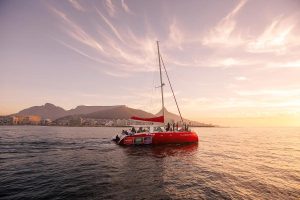
A sunset boat cruise in Table Bay is one of the most memorable ways to experience Cape Town. As the boat leaves the harbour and heads into the Atlantic, the city’s famous landmarks take on a completely different appearance, with Table Mountain, the coastline and the skyline glowing in the warm light of the setting sun. It is a relaxing experience that combines spectacular scenery, ocean air and the magic of a Cape Town sunset.
Departing from the V&A Waterfront, the cruise usually begins with a gentle journey through the harbour before heading into Table Bay. As you move away from the Waterfront, the perspective of Cape Town changes. The city rises behind the shoreline while Table Mountain dominates the skyline, creating an impressive backdrop from the water. The open Atlantic provides a wonderful sense of space, particularly as the boat moves beyond the harbour.
The highlight is, of course, the sunset. As the sun drops towards the western horizon, the sky can change from bright blue to shades of gold, orange, pink and purple. The last rays of sunlight illuminate Table Mountain and the Twelve Apostles, while the reflections on the ocean create a constantly changing scene. Because the boat is moving with the coastline behind you, there are numerous opportunities to find the perfect viewpoint for photographs.
One of the pleasures of a sunset cruise is seeing familiar landmarks from a completely different perspective. The V&A Waterfront, Cape Town Stadium, Signal Hill, Lion’s Head and the Atlantic seaboard become part of one panoramic view. On clear evenings, the coastline stretching towards Clifton, Camps Bay and the Twelve Apostles is particularly impressive.
Looking back towards the city from the water gives you a wonderful appreciation of Cape Town’s dramatic position between mountain and sea. Sunset cruises are generally less about sightseeing from one attraction to another and more about enjoying the atmosphere.

Sit back on deck, feel the Atlantic breeze and watch the changing colours of the sky. Depending on the cruise, drinks and light refreshments may be available, adding to the relaxed evening atmosphere. For couples, it can be a romantic experience, while families, friends and photographers can all enjoy the spectacular scenery.
Table Bay is also home to a variety of marine life. Depending on the season and conditions, you may see seabirds, seals or dolphins, while whales may occasionally be spotted during the appropriate season. Wildlife sightings are never guaranteed, however, and the sunset and scenery remain the main attractions.
A sunset cruise works particularly well towards the end of a busy day exploring Cape Town. After visiting Table Mountain, the Bo-Kaap, the city centre or the V&A Waterfront, stepping aboard a boat provides an opportunity to slow down and simply enjoy the surroundings. As darkness falls, the lights of Cape Town begin to appear along the shoreline, creating a beautiful finale to the cruise.
History, Culture & Neighbourhoods
28. Explore The V&A Waterfront
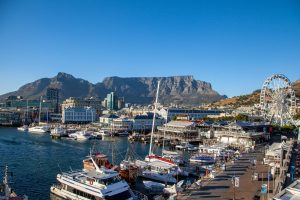
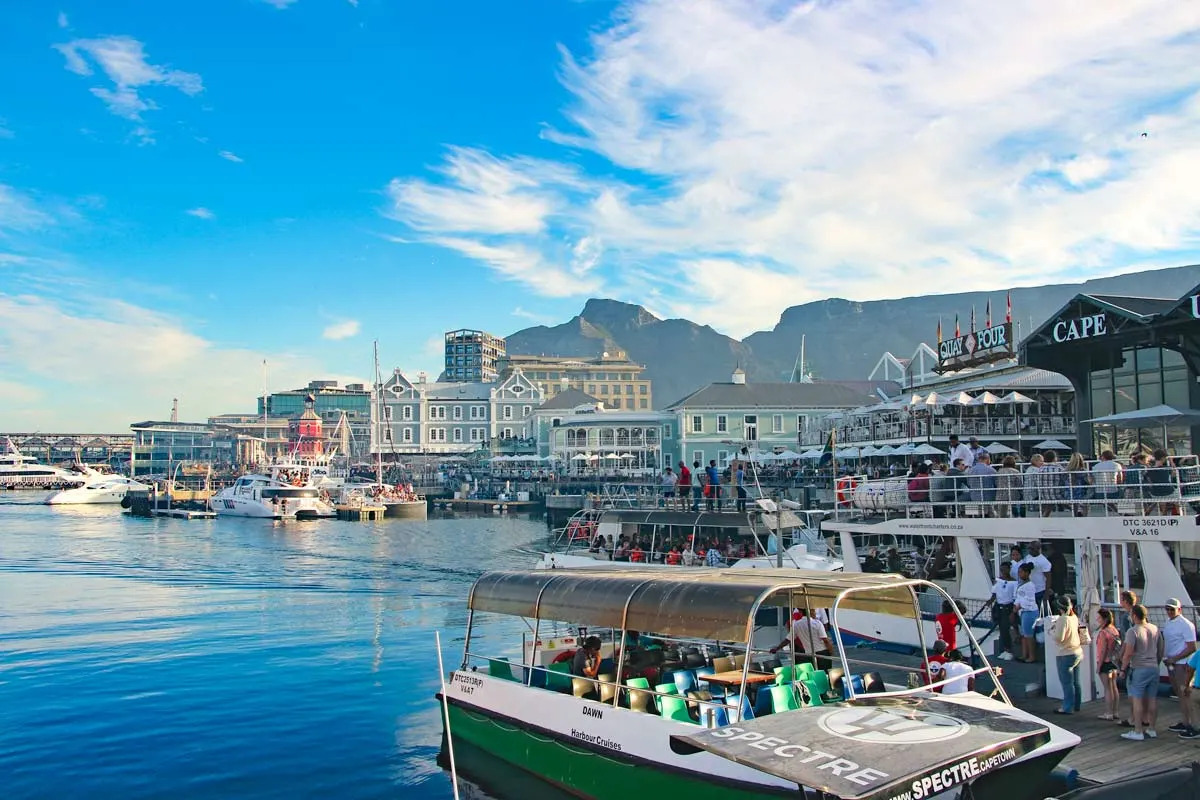
Exploring the V&A Waterfront is one of the most enjoyable ways to experience Cape Town. Set beside the working harbour with Table Mountain as a spectacular backdrop, the Waterfront combines shopping, restaurants, entertainment, history, culture and waterfront activities in one lively destination.It is a place where you can spend a few hours exploring or easily make an entire day of it.
One of the greatest attractions of the V&A Waterfront is its location. The harbour remains a working part of Cape Town’s maritime environment, with boats and vessels moving through the water while visitors explore the surrounding quays.
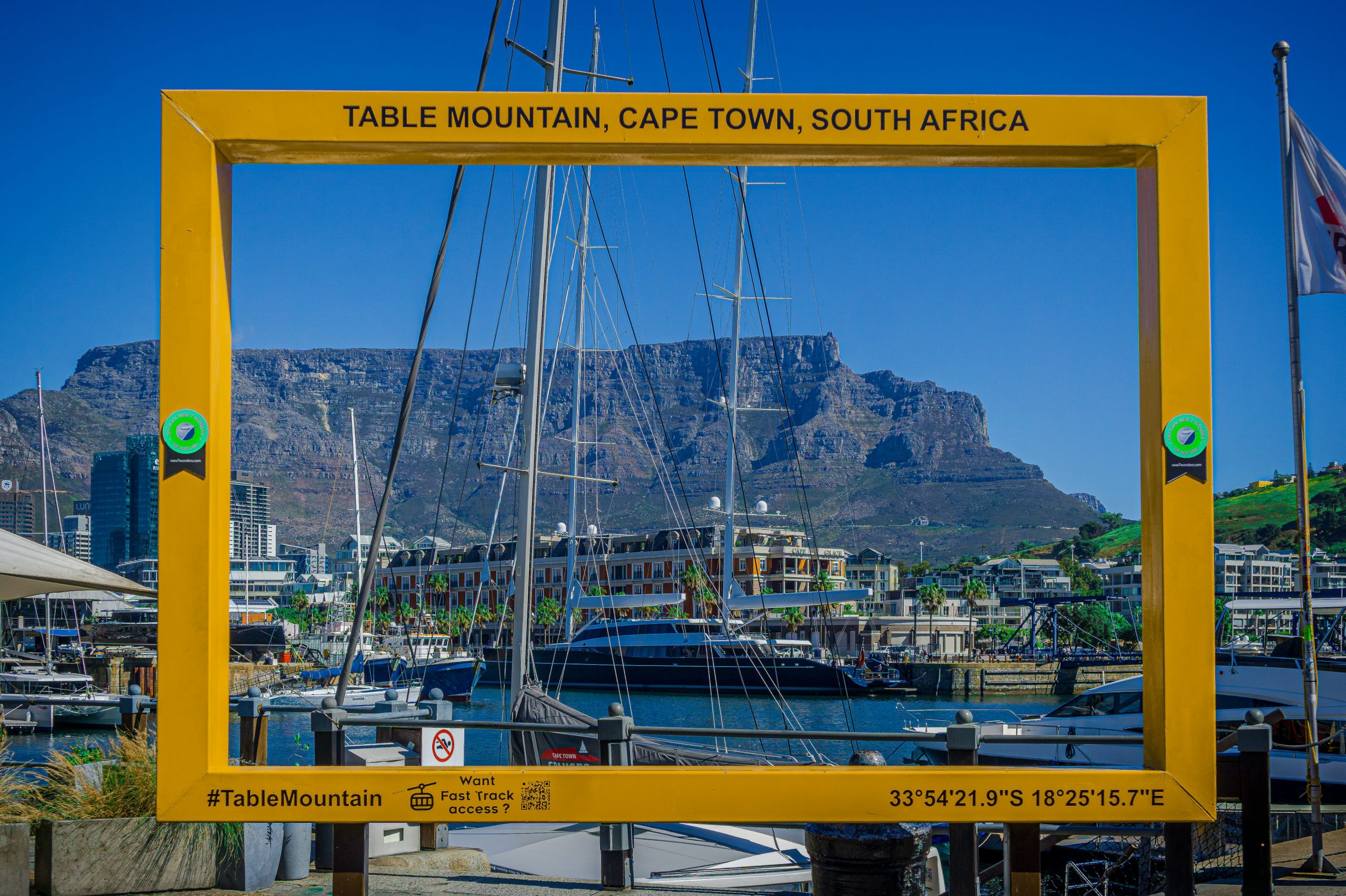
Take a leisurely walk along the waterfront and enjoy views across the harbour towards Table Mountain. The combination of historic buildings, modern architecture, boats and mountains creates one of Cape Town’s most recognisable cityscapes.
The Waterfront is home to a wide variety of shops, from international brands and fashion stores to South African designers, crafts, jewellery and speciality stores. The Watershed is particularly interesting for visitors looking for locally made products. Its collection of South African design, art, crafts and contemporary products makes it a good place to find something distinctive to take home.
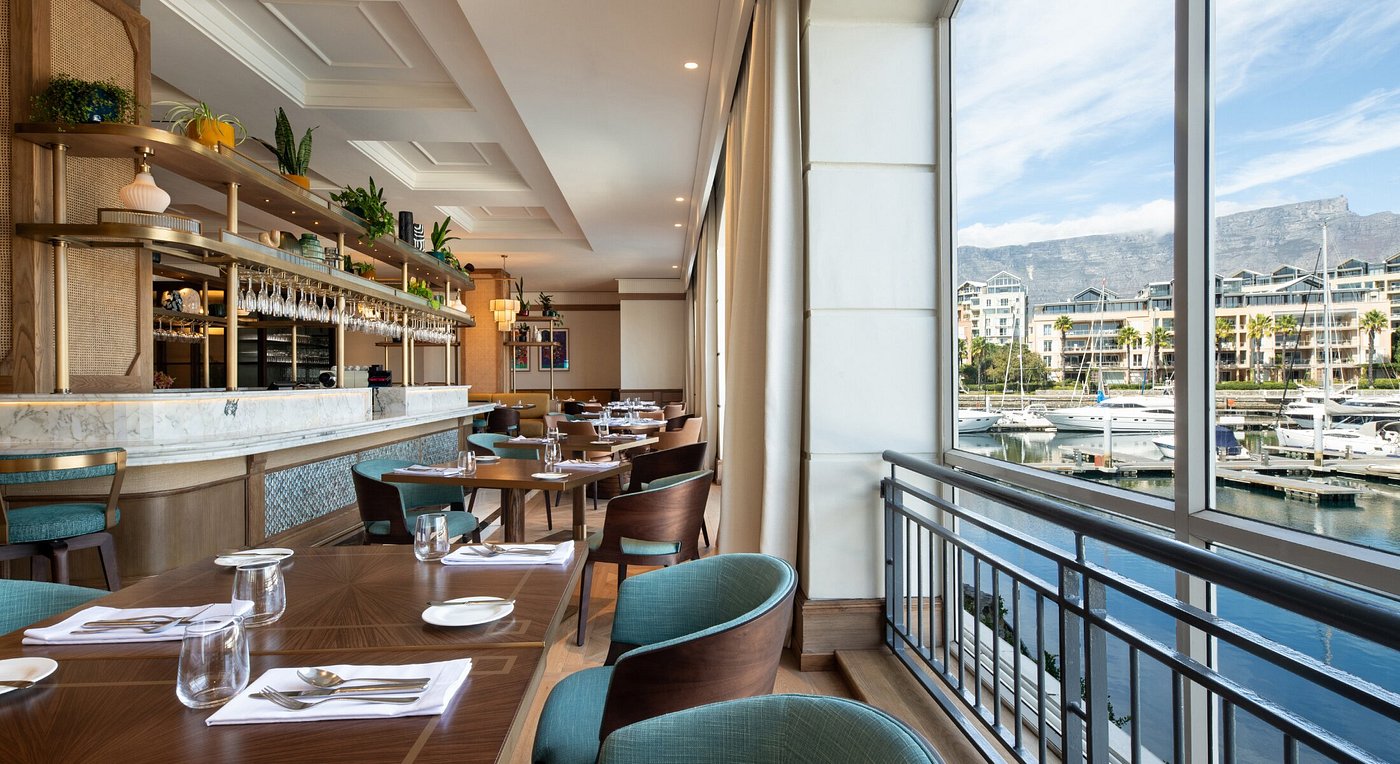
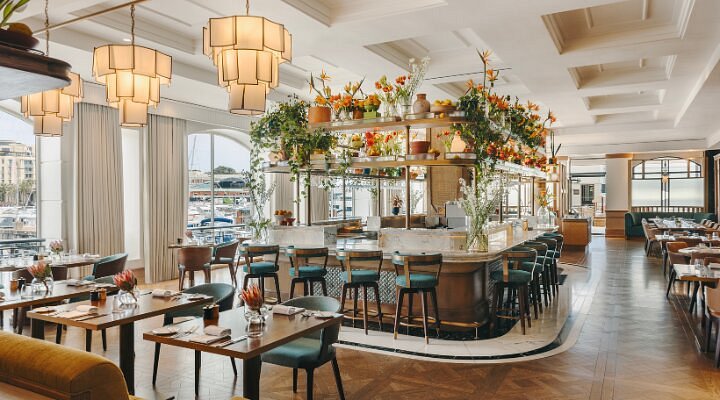
Food is a major part of the Waterfront experience. Restaurants, cafés, markets and casual eateries offer everything from fresh seafood and South African dishes to international cuisine. The setting makes a meal particularly enjoyable. Choose a table overlooking the harbour, relax with a coffee while watching the boats or enjoy an evening dinner with Table Mountain illuminated in the background.
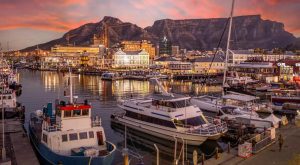
The Waterfront is also a gateway to Cape Town’s ocean. Visitors can choose from harbour cruises, sunset trips, kayaking, sailing and other boating experiences. A short boat trip provides a different perspective of the city, with Table Mountain rising behind the Waterfront and the Atlantic Ocean opening out beyond the harbour.
The Waterfront has a lively atmosphere throughout the day. Street performers, musicians and entertainers often add to the experience, while families, locals and international visitors fill the promenades. As evening approaches, the Waterfront takes on a different character. Restaurants become busier, the harbour lights begin to reflect on the water, and Table Mountain provides an impressive backdrop to the city.
The Waterfront is not simply a modern shopping and entertainment precinct. Its history is closely connected to Cape Town’s harbour and maritime trade. The Chavonnes Battery Museum, Cape Town Diamond Museum and other attractions provide opportunities to discover different aspects of the city’s past, while the historic Clock Tower remains one of the area’s best-known landmarks.
The V&A Waterfront is also an ideal base for exploring other attractions. From here, visitors can access boat trips to Robben Island, enjoy helicopter flights, explore the city centre or simply continue along the Atlantic coastline. Its combination of attractions, restaurants, shops and harbour activities makes it particularly convenient for visitors who want to experience several aspects of Cape Town in one location.
29. Visit Zeitz MOCAA
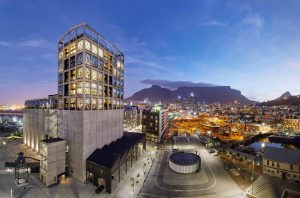
Visiting the Zeitz Museum of Contemporary Art Africa (Zeitz MOCAA) is an opportunity to discover one of Cape Town’s most remarkable cultural attractions. Located at the V&A Waterfront, the museum is dedicated to contemporary art from Africa and its diaspora, bringing together thought-provoking exhibitions within one of the city’s most extraordinary architectural spaces.
Even before entering the galleries, Zeitz MOCAA makes an impression. The museum occupies a dramatically transformed historic grain silo complex, once used for storing and processing grain at Cape Town’s harbour.
The original industrial structure has been reinvented as a striking contemporary museum. Inside, enormous concrete tubes have been carved and shaped to create galleries and public spaces, while the original geometry of the silo remains an important part of the building’s character. The architecture alone makes a visit worthwhile.
Zeitz MOCAA presents contemporary art created by artists from across Africa and the African diaspora. Its exhibitions explore themes including identity, history, politics, culture, migration and the rapidly changing societies of the African continent. The collection encompasses a wide variety of artistic forms, including painting, sculpture, photography, textiles, film and mixed-media installations.
Rather than presenting a single definition of African art, the museum encourages visitors to encounter the diversity of contemporary artistic voices emerging from the continent and its global communities.
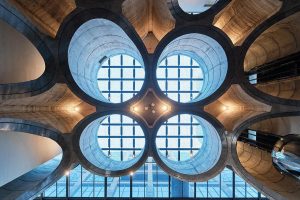
The museum’s unusual architecture creates an experience unlike that of a conventional gallery. Former grain-storage cylinders have been transformed into dramatic exhibition spaces, with curved walls and towering volumes creating a powerful sense of scale. As you move between galleries, the relationship between the industrial building and the contemporary artworks becomes part of the experience.
Zeitz MOCAA’s location in the V&A Waterfront makes it easy to combine a museum visit with other Cape Town experiences. After exploring the galleries, visitors can walk along the harbour, browse shops and markets, enjoy lunch or dinner, or simply take in views across the working waterfront towards Table Mountain. The museum itself also offers impressive views from its upper levels, providing a different perspective of the Waterfront and surrounding city.
Zeitz MOCAA represents another side of Cape Town. While the city is famous for its mountains, beaches, historic neighbourhoods and natural attractions, the museum demonstrates its growing reputation as an international centre for contemporary African art and culture. For visitors interested in architecture, history, photography, design or modern African culture, it provides a fascinating contrast to Cape Town’s more traditional museums and heritage sites.
A visit is best enjoyed without rushing. Give yourself enough time to explore the exhibitions, appreciate the building and pause to consider the ideas presented by the artists. Because exhibitions change, returning visitors can encounter completely different works and perspectives on subsequent visits.
30. Taste Cape Malay Cuisine

Tasting Cape Malay cuisine in the Bo-Kaap is one of the best ways to experience Cape Town’s rich cultural heritage through food. The colourful neighbourhood is closely associated with the city’s Cape Malay community, whose culinary traditions developed over generations and became an important part of Cape Town’s identity.
A meal here is about much more than eating. It is an opportunity to discover the history, aromas and hospitality of one of the city’s most distinctive cultural communities.
Cape Malay cuisine is known for its fragrant combination of spices, sweet and savoury flavours, and comforting home-style dishes. Cinnamon, cardamom, cloves, turmeric, cumin and coriander are commonly used to create rich layers of flavour without necessarily making the food overwhelmingly hot. The result is a cuisine that is aromatic, warming and deeply satisfying.
A visit to the Bo-Kaap provides an opportunity to sample dishes that have become synonymous with Cape Malay cooking. Bobotie is perhaps the best-known example: a gently spiced minced-meat dish traditionally topped with an egg-based mixture and baked until golden.
Other favourites include Cape Malay chicken curry, bredies, pickled fish, samoosas, koeksisters and various spicy savoury pastries. Recipes and preparation methods vary between families and restaurants, making each meal slightly different.
Part of the pleasure of eating in the Bo-Kaap is the setting. The neighbourhood’s brightly painted houses, steep streets and historic architecture create a colourful backdrop for a meal. Walking through the area before or after lunch allows you to appreciate the connection between the food, community and history of the neighbourhood.

The aromas of spices drifting from kitchens and restaurants add another dimension to the experience. Cape Malay food reflects the complex history of Cape Town and the people who were brought to the Cape from different parts of the Indian Ocean and Southeast Asian world during the colonial period.
Over generations, culinary traditions blended with ingredients and influences found at the Cape, creating a distinctive cuisine that is now an important part of South African food culture. Food therefore becomes a way of understanding the Bo-Kaap: not simply as a colourful tourist attraction, but as a living community with a rich cultural heritage.
For visitors, the best experience is to sit down to a relaxed meal and sample several dishes rather than rushing through a single plate. Sharing different curries, savoury snacks and traditional accompaniments allows you to appreciate the variety of flavours.
Cape Ability Tours will provide a knowledgeable local guide and restaurant host who will explain the origins of particular dishes and how they are traditionally prepared.
Cape Malay cuisine offers something completely different from the seafood, steaks and contemporary restaurants that are also associated with Cape Town. It is fragrant, comforting and strongly connected to the city’s history. Combining a meal with a walking tour of the Bo-Kaap makes for an especially rewarding experience, bringing together the neighbourhood’s architecture, culture, stories and food.
Q&A About Cape Town Tourism
-
Why is Cape Town such a popular tourist destination?
Cape Town combines spectacular natural scenery, beautiful beaches, diverse cultures, history, outdoor adventure, excellent food and wine, and a vibrant city atmosphere. Table Mountain provides an iconic backdrop, while attractions such as the V&A Waterfront, Robben Island, Cape Point and Kirstenbosch offer very different experiences within relatively easy reach of the city.
-
What are the must-see attractions in Cape Town?
First-time visitors should consider Table Mountain, the V&A Waterfront, Robben Island, Cape Point, Boulders Beach, Kirstenbosch National Botanical Garden and the Cape Winelands. The city’s attractions range from nature and wildlife to history, art, food and adventure.
-
How many days do you need in Cape Town?
A minimum of four to five days allows visitors to experience the major highlights without rushing. A week or longer is ideal for combining the city with the Cape Peninsula, Cape Winelands, whale-watching destinations and surrounding coastal areas.
-
What is the best way to see Cape Town?
A combination of guided sightseeing, scenic drives and independent exploration works particularly well. Visitors can explore the city centre and V&A Waterfront on foot, take the cableway or hike on Table Mountain, drive around the Cape Peninsula, and use organised tours for destinations farther afield.
-
Is the V&A Waterfront worth visiting?
Yes. The V&A Waterfront combines shopping, restaurants, museums, entertainment, harbour activities and spectacular views of Table Mountain. It is also a departure point for experiences such as harbour cruises, sunset cruises, helicopter flights and Robben Island trips.
-
What can you do at the V&A Waterfront?
Visitors can explore Zeitz MOCAA, the Two Oceans Aquarium, Victoria Wharf, Watershed, the Cape Wheel, harbour cruises, restaurants and historic harbour areas. There are also numerous family activities and water-based experiences.
-
Is Cape Town good for outdoor activities?
Cape Town is exceptionally well suited to outdoor tourism. Popular activities include hiking, mountain biking, kayaking, surfing, paragliding, sailing, diving, whale watching and scenic coastal walks. The city’s unusual combination of mountains and ocean means many outdoor experiences are close to the urban centre.
-
What are the best beaches in Cape Town?
Some of the best-known beaches include Clifton, Camps Bay, Llandudno, Muizenberg, Boulders Beach and Bloubergstrand. They offer very different experiences, from sheltered swimming and sunbathing to surfing, photography and spectacular views.
-
Can you see African penguins near Cape Town?
Yes. Boulders Beach near Simon’s Town is one of the best-known places to see African penguins in their natural environment. Visitors can observe the colony from designated viewing areas while following conservation guidelines.
-
What is the Cape Peninsula?
The Cape Peninsula is the spectacular southern extension of the Cape Town metropolitan area. A classic Peninsula tour can include Hout Bay, Chapman’s Peak Drive, Noordhoek, Cape Point, the Cape of Good Hope and Simon’s Town.
-
Is Cape Point the southernmost point of Africa?
No. Although Cape Point is one of South Africa’s most dramatic coastal landmarks, the southernmost point of Africa is Cape Agulhas, farther southeast. Cape Point is famous for its rugged cliffs, lighthouse, ocean views and location within Table Mountain National Park.
-
When is the best time to visit Cape Town?
Cape Town can be visited throughout the year. Summer, from roughly December to February, is popular for beaches, outdoor activities and long sunny days. Winter brings cooler and wetter weather but can offer beautiful clear days, while spring is particularly attractive for wildflowers and autumn often provides pleasant conditions and fewer crowds.
-
What makes Cape Town’s natural environment special?
Cape Town lies within the Cape Floristic Region, one of the world’s major biodiversity hotspots. The surrounding landscape includes fynbos, mountains, forests, wetlands, beaches and marine environments, creating an extraordinary variety of plant and animal life.
-
Can you go whale watching from Cape Town?
Yes. During the whale season, from June to November, visitors can travel to destinations along the southern Cape coast, particularly Hermanus, where Southern right whales can often be seen from land and on boat excursions. The season is generally concentrated in the winter and spring months.
-
What cultural experiences should visitors have in Cape Town?
Visitors can explore the Bo-Kaap, learn about Cape Malay culture and cuisine, visit museums and galleries, explore historic neighbourhoods and discover Cape Town’s complex colonial, apartheid and democratic history. A guided tour can provide valuable context that visitors might otherwise miss.
-
What is Cape Malay food?
Cape Malay cuisine is an important part of Cape Town’s cultural heritage. It is known for fragrant spices and dishes such as bobotie, curries, bredies, samoosas and koeksisters. The Bo-Kaap is particularly associated with Cape Malay culinary traditions.
-
Is Cape Town suitable for families?
Yes. Families can choose from beaches, the Two Oceans Aquarium, the Cape Wheel, boat trips, penguin viewing, nature reserves, museums and numerous outdoor activities. The V&A Waterfront offers a wide range of family-friendly attractions.
-
What are some romantic things to do in Cape Town?
Couples can watch the sunset from Signal Hill, enjoy a sunset catamaran cruise, dine overlooking the ocean, take a scenic drive along Chapman’s Peak, explore the Cape Winelands or enjoy a picnic at Kirstenbosch.
-
Can you visit Cape Town without a car?
Yes. The city centre and V&A Waterfront are relatively easy to explore without a car, and public transport, ride-hailing services and organised tours provide additional options. The V&A Waterfront is also accessible by MyCiTi bus and offers water-taxi connections.
-
Is the V&A Waterfront open every day?
The V&A Waterfront states that it is open every day of the year, including public holidays and festive periods. Individual shops, restaurants and attractions have their own operating hours.
-
What should visitors pack for Cape Town?
Pack comfortable walking shoes, sunscreen, sunglasses, a hat and layers of clothing. A warm jacket or windbreaker is useful even during summer because conditions can change quickly, particularly on mountains and around the ocean.
-
What is the best scenic drive around Cape Town?
Chapman’s Peak Drive is one of the most spectacular, linking Hout Bay and Noordhoek along a dramatic Atlantic coastline. Other beautiful drives include Clarence Drive, the road around the Cape Peninsula and routes through the Constantia and Cape Winelands areas.
-
Is Cape Town good for adventure tourism?
Absolutely. Visitors can hike Table Mountain and Lion’s Head, paraglide from Signal Hill, kayak in False Bay, surf in Muizenberg, dive or snorkel, take helicopter flights and explore the coastline by boat.
-
What is the best way to experience Table Mountain?
Visitors can take the Table Mountain Aerial Cableway for a quick and spectacular ascent, or hike one of several trails for a more active experience. Weather is an important consideration because cloud, wind and visibility can change rapidly.
-
What makes Cape Town different from other cities?
Cape Town’s greatest strength is its combination of city, mountain and ocean. Few destinations allow visitors to hike a world-famous mountain in the morning, visit a penguin colony in the afternoon, enjoy a coastal sunset and finish the day with excellent food and wine.